

Verify customers from Zendesk
Zendesk and the compliance workflow around it.
Zendesk publishes 13 trigger events and 12 actions on its public Zapier listing. A trigger that carries the person’s name and email can start a StackGo check.
Also listed under CRM
Zendesk is a web-based help desk support tool that makes it simple to provide great customer support.
Description supplied by Zendesk.
Across the workflow, not at a step
A chat or support tool does not sit at one step of a compliance workflow. It carries the workflow to the people who have to act on it — which is why it belongs here, and why pinning it to Intake or Monitor would be wrong.
- Tag Added to User
An outcome, not a record. Zendesk is not your system of record, so it is told what happened — never the client's identity data. The verification detail stays where it belongs.
| Field | What it holds |
|---|---|
| What happened Outcome | A check cleared, referred or failed |
| Who it was for Outcome | The client name already in your system — no identity data |
| When Outcome | The time it completed, so the notification is actionable |
| Where the record is Outcome | A link back to the full record, behind your login |
- Outcome Carries no identity data. Safe anywhere your team already works.
The two directions are independent. You can have Zendesk start a check and write nothing back — the result stays in StackGo, behind your login, and Zendesk is never touched. Or write back without a trigger, and start checks by hand. Firms whose system of record is visible to support staff, contractors or an outsourced team often choose trigger-only for exactly that reason.
Zendesk’s public integration surface
The rest of what Zendesk exposes on Zapier, beyond the ones above. A trigger that carries a person’s name and email can start a check. StackGo has no Zapier trigger of its own, so these actions are not run from a StackGo result.
- New Group
- New Tag Added to Ticket
- New Comment on Ticket
- New Ticket in View
- New Ticket
- New Organization
- New Suspended Ticket
- New Action on Ticket
- Updated Ticket
- Updated Ticket in View
- New User
- New View
- Delete User
- Create Organization
- Remove Tag(s) from Ticket
- Create Ticket
- Attach File to Ticket
- Add Comment to Ticket
- Add Tag(s) to Ticket
- Update Organization
- Update Ticket
- Update User
- Create User
- API Request (Beta)
Names are Zendesk’s own, read from its public Zapier listing on 23 October 2026.
Connected through Zapier
Tag a customer in Zendesk to send their identity check; the result is in StackGo.
One Zap: Tag Added to User starts Create Verification
A one-off set-up before your first check: one Zap, built once, runs for every customer you tag. Use the API key from StackGo, under Integrations, Zapier.
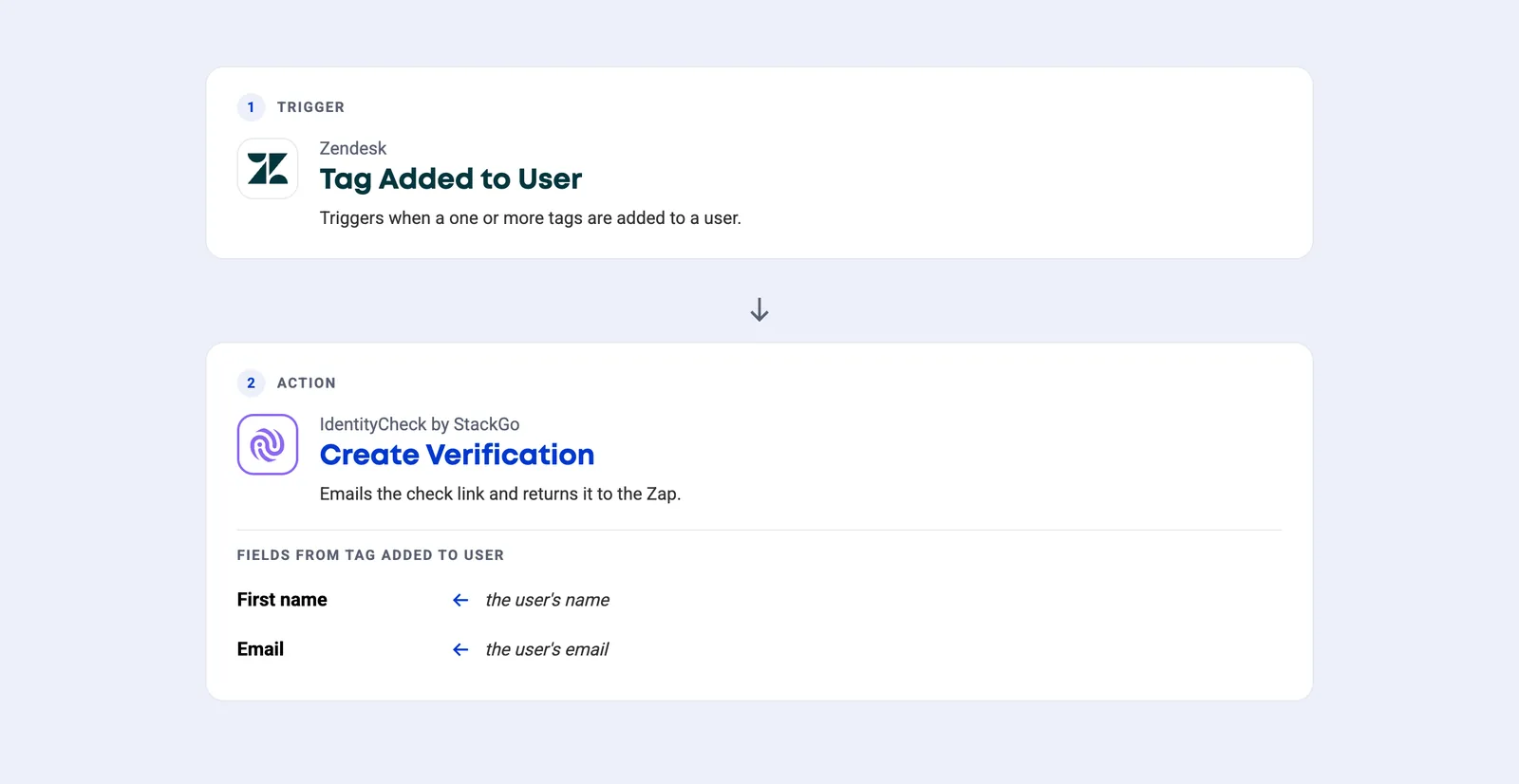
- Built once, runs for every client. Use the API key from StackGo, under Integrations, Zapier.
- The trigger names are Zendesk’s own, exactly as they appear in Zapier.
From a tag in Zendesk to a verified client
An agent tags the customer’s profile in Zendesk. The Zap emails them a check link, they verify on their phone, and StackGo emails your team the result.
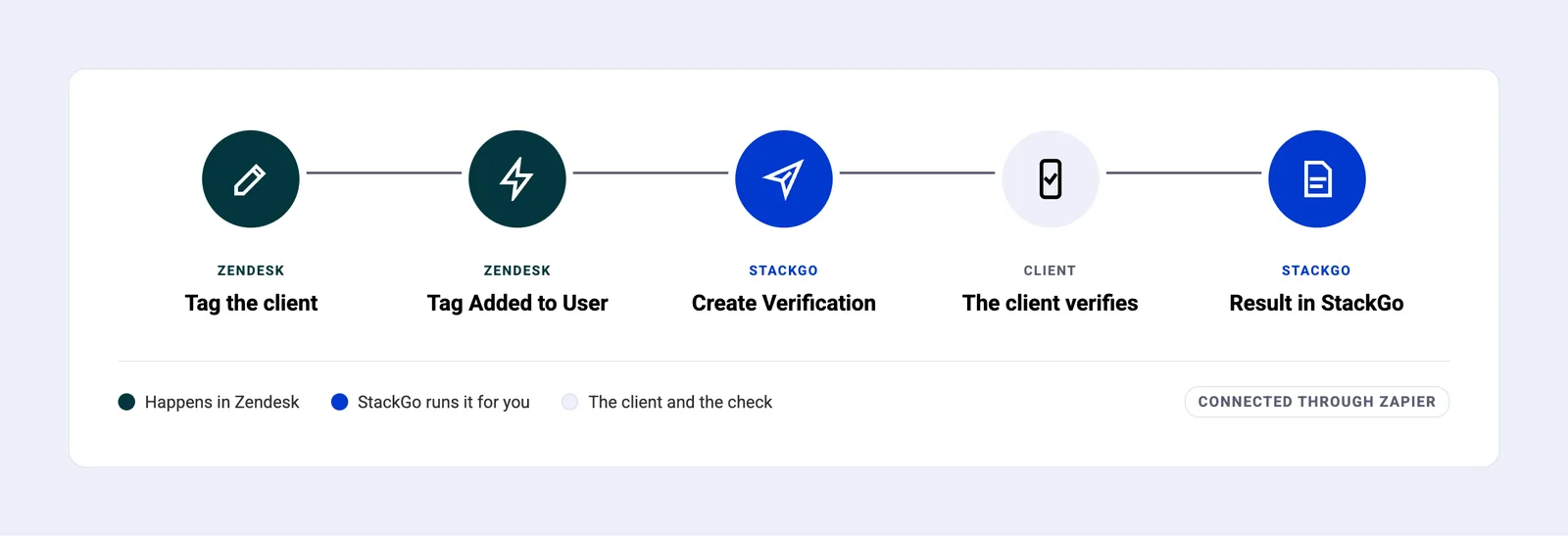
- Tag the client. On their profile in Zendesk, add your check tag under Tags.
- Tag Added to User. Adding the tag fires Zapier’s Tag Added to User trigger straight away.
- Create Verification. The Zap passes the client’s name and email to StackGo, which emails the check link.
- The client verifies. A short form if you ask for one, then ID photo and selfie on their phone.
- Result in StackGo. Result and full report in StackGo, and your team gets an email.
Tag the client’s profile in Zendesk
Open the customer’s profile from their ticket and add your check tag under Tags.
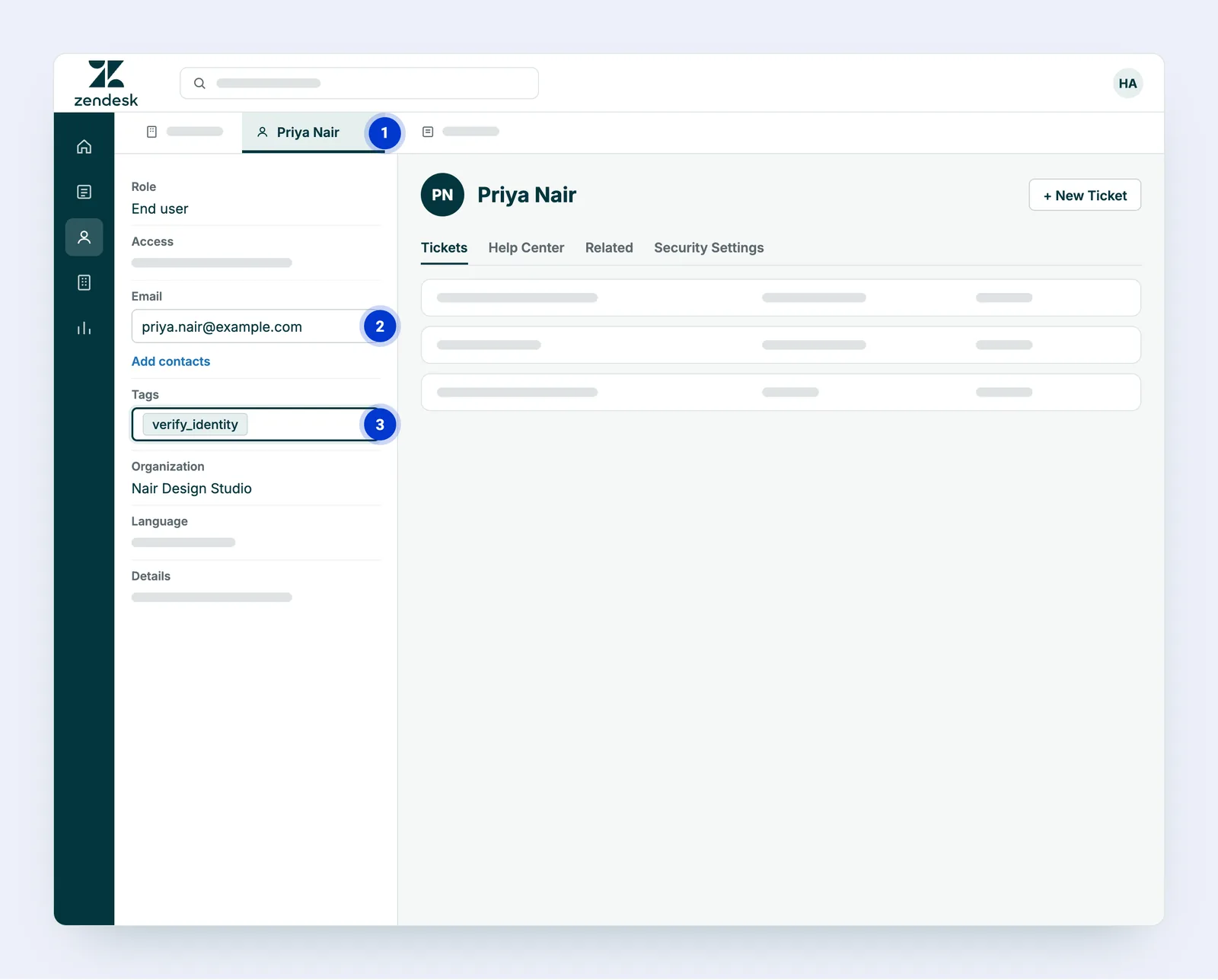
- Open the client’s profile from their ticket. Click the tab for the requester’s profile, or find them on the Customers page.
- Their name and email carry through to StackGo, so nobody types them twice. The check link goes to this email.
- Add your check tag under Tags, for example verify_identity. That fires Tag Added to User in Zapier straight away. An admin turns on tags for users once, in Admin Center.
On the client’s phone, a few minutes, nothing to type
Everything happens on the client’s own phone, from the email StackGo sends.
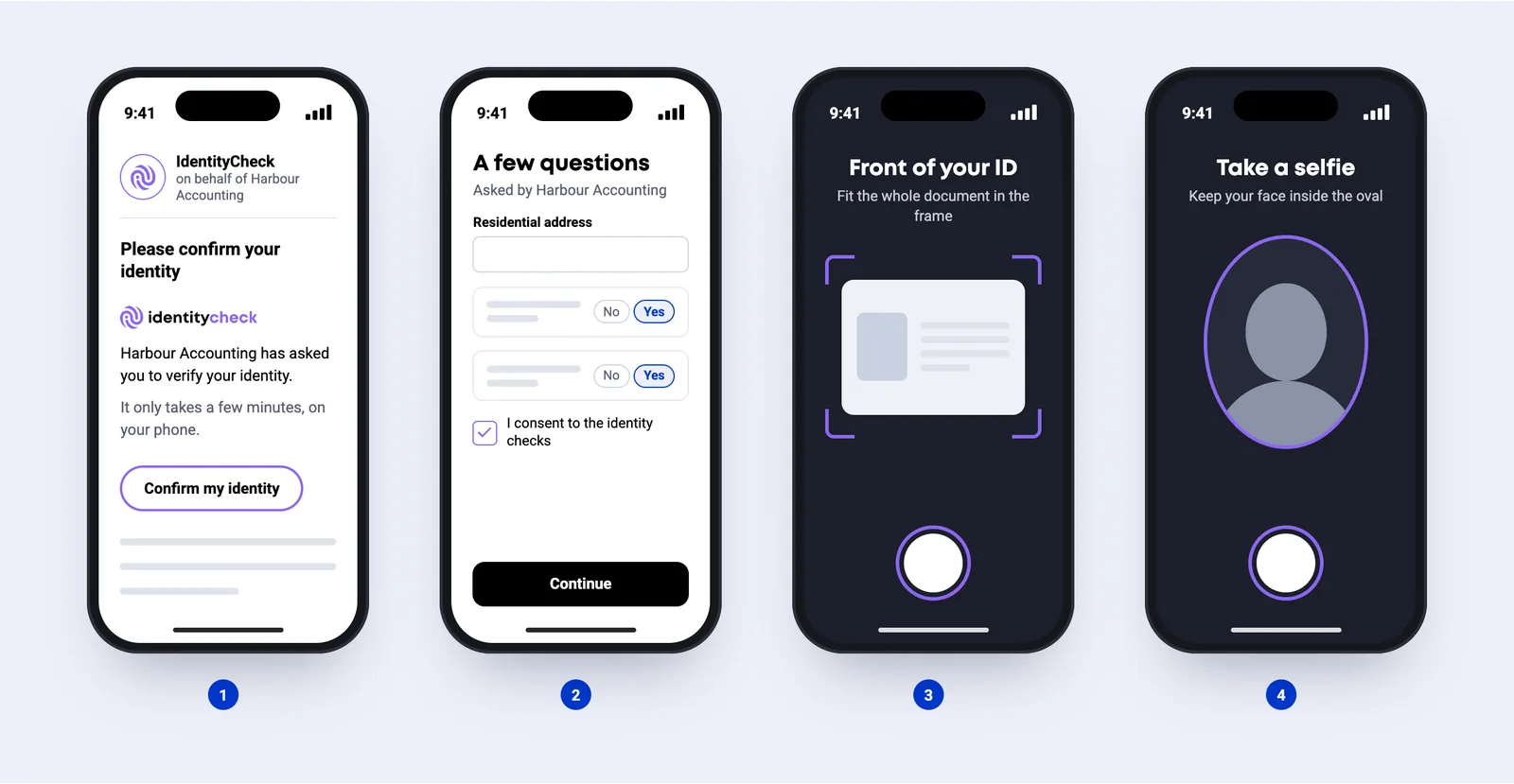
- Open the link. An email from IdentityCheck, sent on behalf of your business.
- A few questions (optional). Only if you have set up a form: details, consent or a few questions.
- Photograph the ID. Passport, driver licence or national ID card.
- Take a selfie. A quick photo to match their face to the ID.
StackGo emails your team when the check is complete
StackGo emails your team the result as soon as the check is complete.
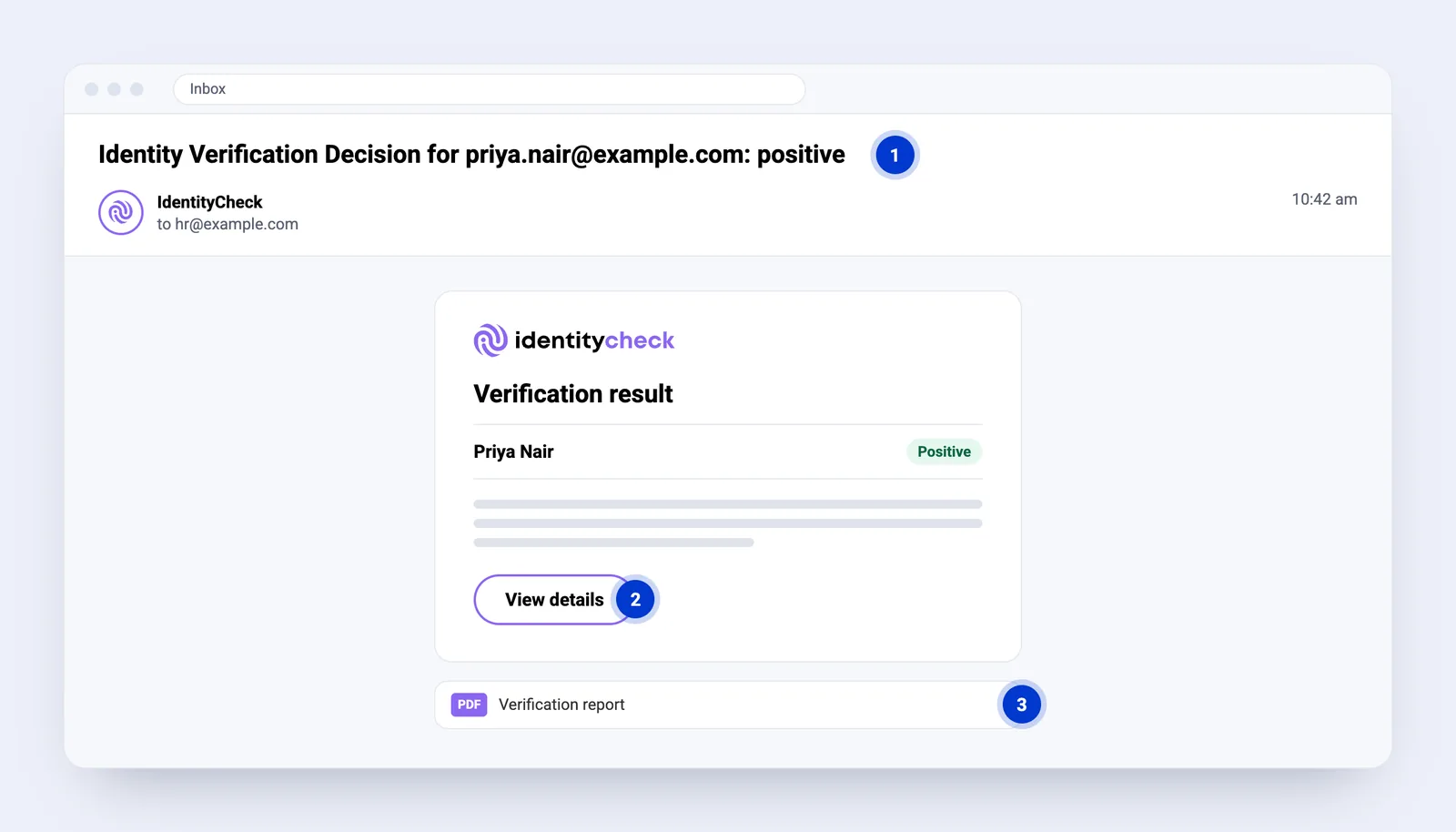
- The result is in the subject line. It goes to the Notification Email set in StackGo, under Account, Notifications.
- View details opens the full report in StackGo.
- The PDF report can be attached too. Ask us to turn it on.
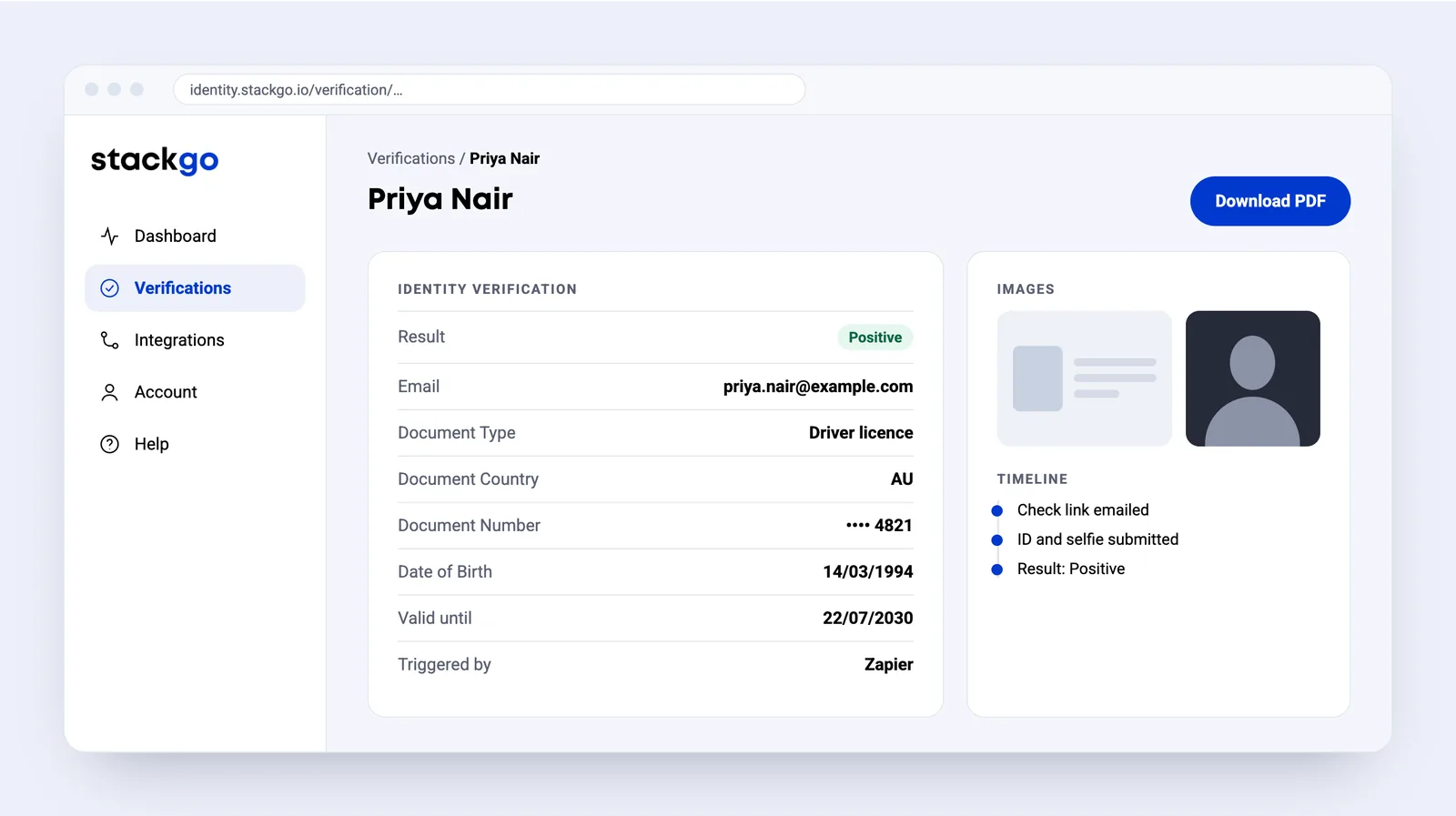
The result and the full report in StackGo
The report records the document, date of birth, ID and selfie images, and a timeline of the check. Download it as a PDF for your records.
Common questions about Zendesk
How to integrate Zendesk?
StackGo connects to Zendesk through Zapier, and a check can start from an event like “Tag Added to User”. Zendesk is then told the outcome — cleared, referred or failed — while the verification record itself stays in your system of record.
Does StackGo write the result back to Zendesk?
Not automatically. Through Zapier, nothing is written onto the Zendesk record: IdentityCheck sends results by webhook, not as a Zapier trigger. StackGo emails your team when the check is complete, and the result and full report are in StackGo. If you need the result on the record, it can be set up from that webhook.
What does the client have to do?
Open the email from IdentityCheck on their phone, answer a short form if you have set one up, photograph their ID and take a selfie.
How does my team find out the result?
StackGo emails the Notification Email set under Account, Notifications, with the result in the subject line and a link to the full report. The PDF report can be attached if you ask us to turn it on.
Can something other than “Tag Added to User” start a check?
New Tag Added to Ticket can start a check from a ticket instead. New User would send a check to everyone who contacts support, and ticket updates fire again and again, so neither is a good start. An admin turns on tags for users once, in Admin Center. Talk to us if a different moment suits your process better.
Zendesk is made by www.zendesk.com. We are not affiliated with them.






Ready to make onboarding minutes, not hours?
Start free and run your first check today, or book a demo and we will walk you through it.