

If your business operates in a regulated industry, accounting, financial services, legal, you’ve almost certainly encountered the term United Nations sanctions list during compliance conversations. It’s one of the most referenced watchlists globally, and for good reason: it carries legally binding obligations for every UN member state, Australia included. Failing to screen against it isn’t just a compliance gap; it can expose your business to serious legal and financial consequences.
But what exactly is on this list, who maintains it, and how are you supposed to use it in practice? These are fair questions, especially when your primary job isn’t sanctions compliance, it’s running your business. The reality is that screening obligations touch every client onboarding workflow, from verifying a new accounting client to processing a financial services application. That’s precisely why we built StackGo’s IdentityCheck, to handle KYC and AML screening directly inside your existing CRM, so compliance doesn’t mean switching between platforms or bolting on disconnected tools.
This article breaks down what the UN sanctions list is, who it covers, how it’s structured, and how to practically apply it within your compliance processes.
What the United Nations sanctions list covers
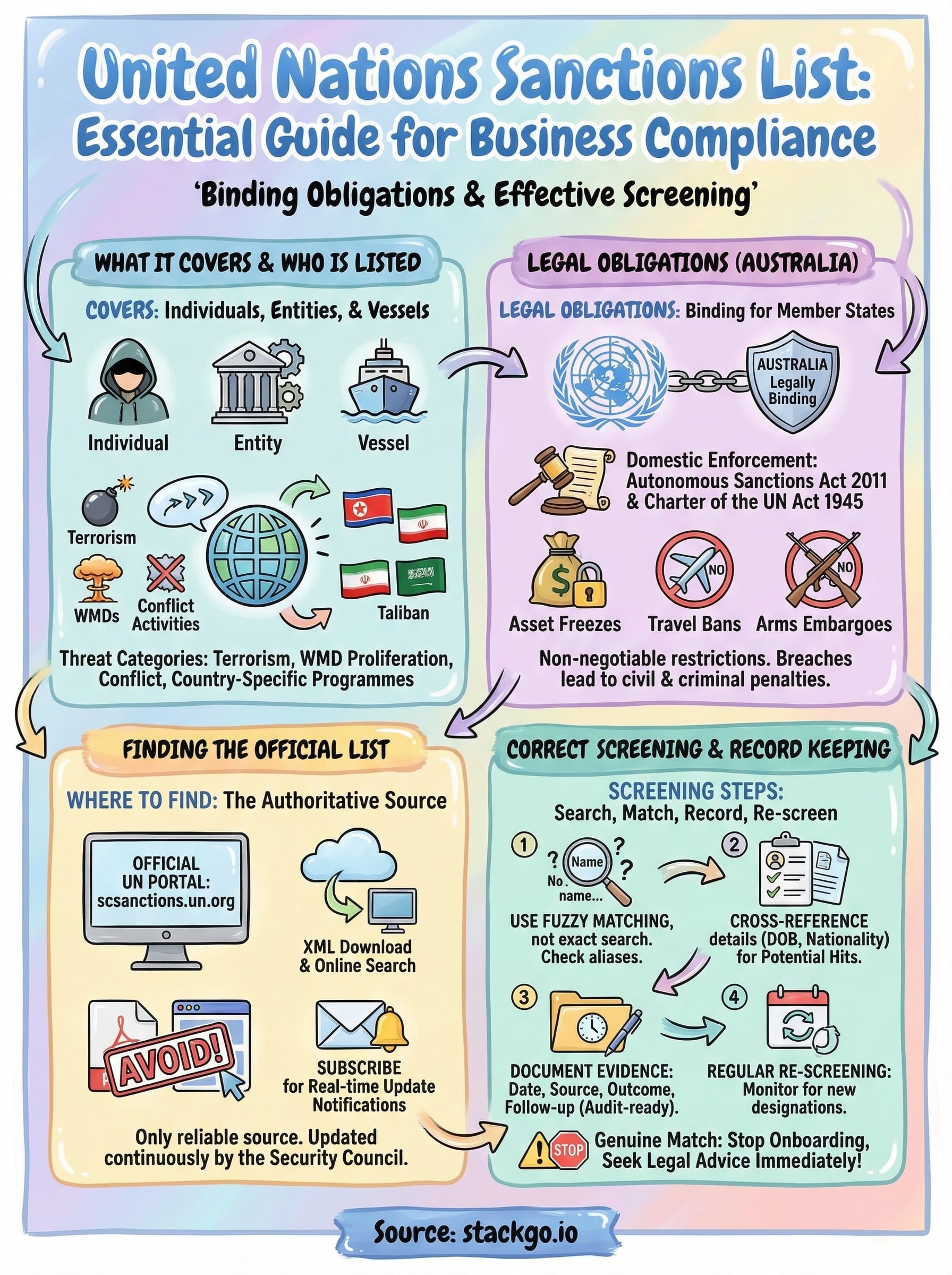
The United Nations Security Council Consolidated List is the official database maintained by the UN Security Council. It brings together every individual, entity, and vessel placed under sanctions by all active UN Security Council committees. These committees cover a range of threat categories, including terrorism, the proliferation of weapons of mass destruction, conflict-related activities, and country-specific programmes targeting North Korea, Iran, the Taliban, and others. The list is updated continuously as the Security Council adds or removes designations.
Who and what gets listed
Three types of entries make up the list: individuals, entities, and vessels. Individuals are typically named persons with multiple aliases, dates of birth, nationalities, and identification numbers. Entities include businesses, organisations, and groups. Vessels are ships flagged for sanctions-related breaches. Each entry includes as much identifying detail as the submitting member state or committee provided, which means some records are comprehensive and others contain minimal information. When you screen a client against the united nations sanctions list, you are checking your subject across all three categories at once.
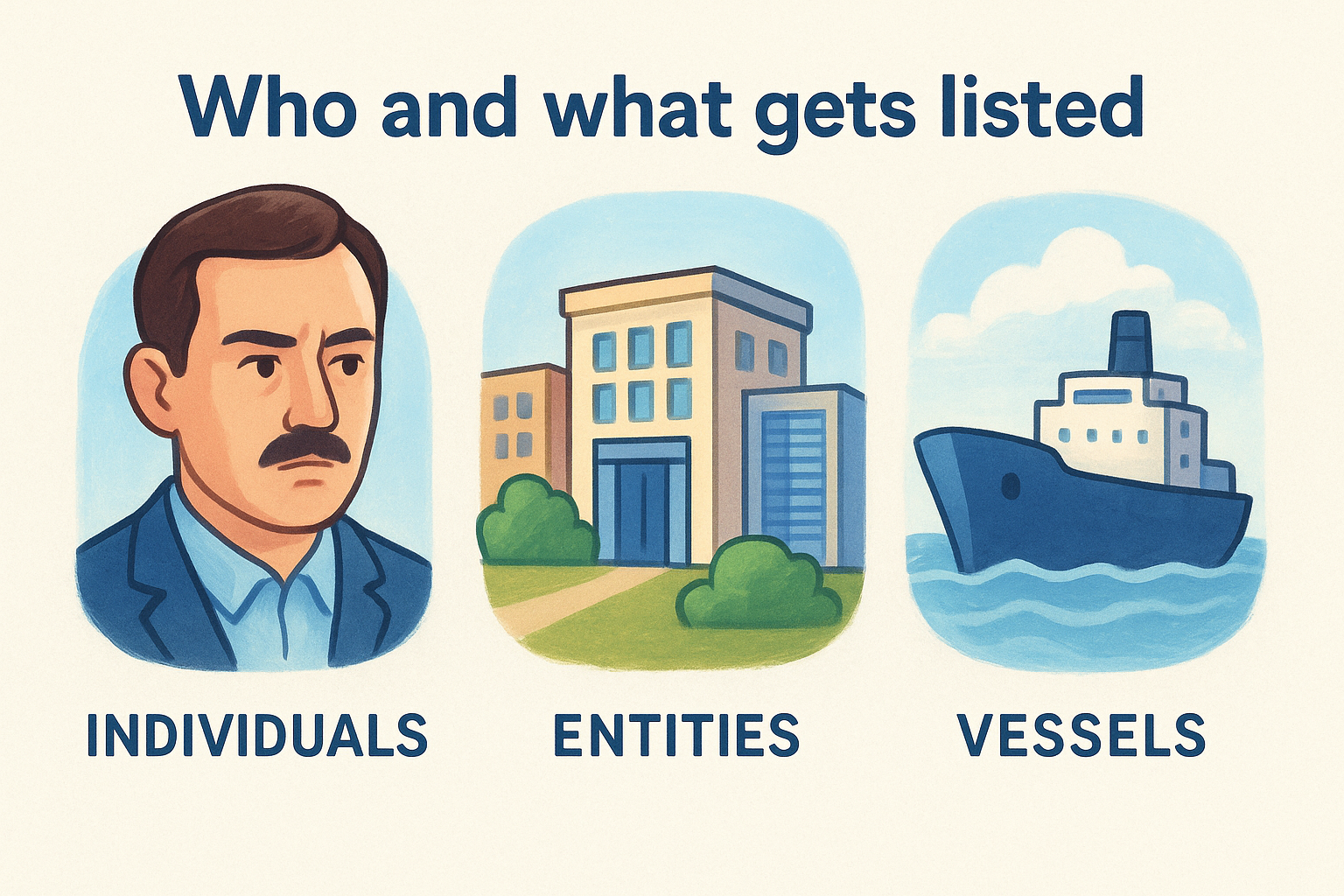
A single individual may appear under dozens of name variations, which is why relying on an exact-name search alone is not sufficient for compliant screening.
What the restrictions require
Once a person or entity appears on the list, UN member states carry a legal obligation to apply specific measures. These typically include asset freezes, travel bans, and arms embargoes, with the exact restrictions determined by which committee originally listed them. For Australian businesses, this means you cannot knowingly provide services, process transactions, or facilitate dealings with any listed party. The Australian sanctions regime enforces these obligations domestically through the Autonomous Sanctions Act 2011 and the Charter of the United Nations Act 1945. Breaching these obligations carries significant civil and criminal penalties.
Why the UN consolidated list matters for compliance
The UN consolidated list carries weight that most other watchlists don’t: it’s legally binding on every UN member state. Unlike advisory databases or industry-specific blacklists, the united nations sanctions list creates enforceable obligations at the national level. For Australian businesses, this means screening isn’t optional; it’s a legal requirement under the Charter of the United Nations Act 1945 and the Autonomous Sanctions Act 2011.
The legal obligation sits with your business
When you onboard a new client, you carry the responsibility for confirming they don’t appear on the list before providing any services. Regulators expect documented evidence of that check, completed before the engagement begins, not retrospectively.
Regulators don’t accept "we weren’t aware" as a defence; the obligation to screen exists regardless of intent.
Failing to identify a listed party exposes your business to criminal penalties, significant civil fines, and reputational damage that’s difficult to walk back from. Your compliance programme needs to treat sanctions screening as a non-negotiable step in every client onboarding workflow, applied consistently and recorded properly each time. The risk isn’t theoretical; enforcement actions against Australian businesses have increased steadily in recent years.
Where to find the official, current list
The only reliable source for the united nations sanctions list is the official UN Security Council website at scsanctions.un.org. This portal is maintained directly by the UN and reflects real-time updates as the Security Council adds or removes designations. Avoid third-party copies or static PDF downloads; these go stale quickly and could leave you checking against an incomplete dataset.
Downloading or searching the list directly
Your two main options on the portal are an online search tool and a downloadable XML file. Both draw from the same authoritative source, but the XML download is what most compliance platforms use to integrate sanctions data into automated screening workflows. The XML dataset covers all active designations across every UN sanctions committee in a single file.
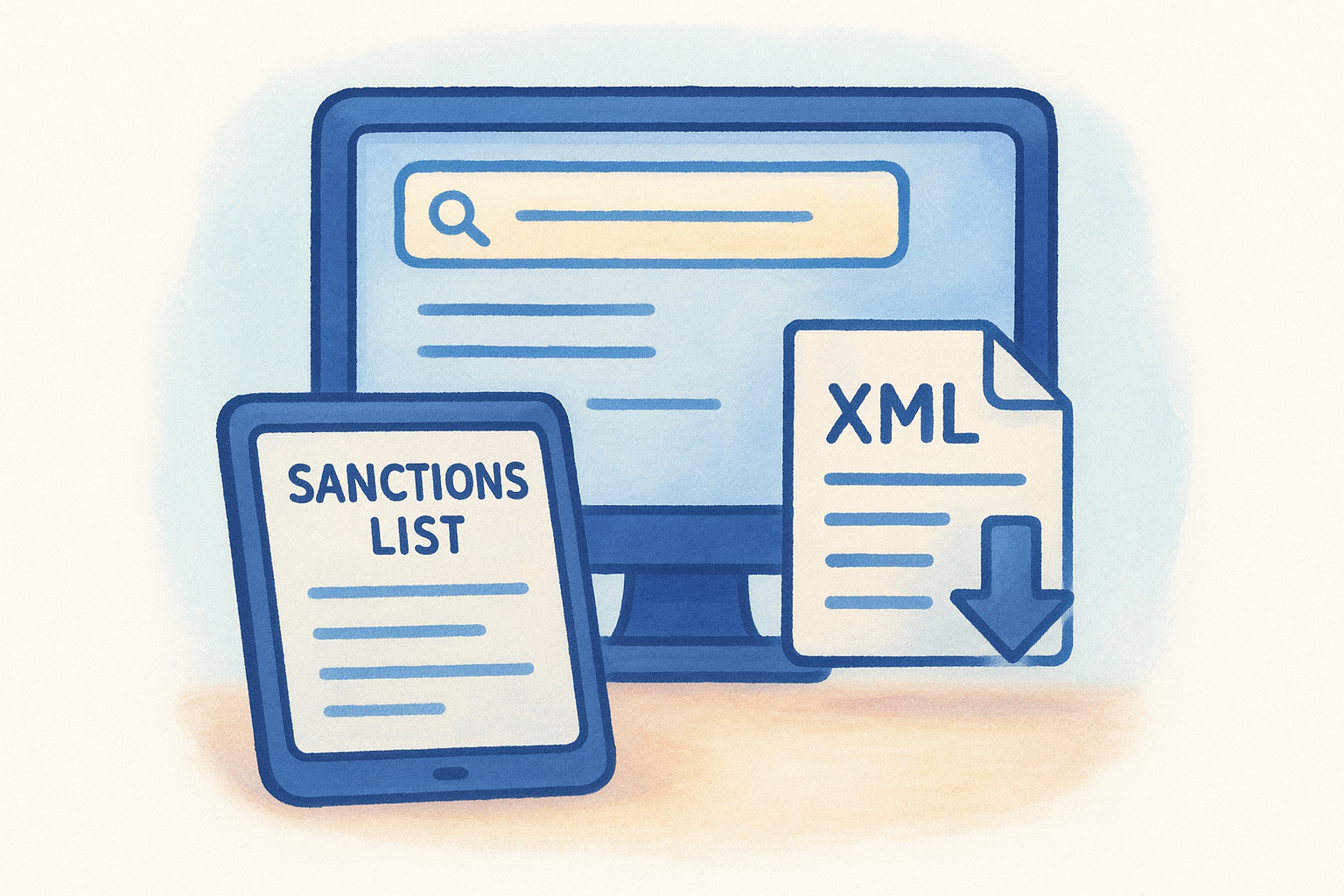
Always check the file’s generation date before using a downloaded copy, as the list can be updated multiple times within a single week.
Subscribing to update notifications
The UN portal also lets you register for email alerts when the consolidated list changes. Signing up for these notifications means your team learns about new designations or removals as they happen, without having to manually revisit the site each day.
How to search and match names correctly
The UN Security Council portal offers a built-in search function, but using it correctly takes more than typing a name. The united nations sanctions list contains entries with extensive alias lists, transliterated spellings, and historical name variations that a basic keyword search can miss.
Use fuzzy matching, not exact search
Relying on an exact-name match will produce false negatives. Listed individuals often appear under multiple romanised spellings, plus legal names, aliases, and maiden names. Run your client’s name through several spelling variations, and cross-check adjacent fields like date of birth and nationality to confirm or rule out a potential match.
A partial name match requires further investigation before you conclude the subject is clear; document your reasoning either way.
What to do when you find a potential match
If your search returns a possible hit, do not dismiss it without a documented review. Cross-reference the entry’s identifying details, including nationality, date of birth, and listed aliases, against your client’s records.
A genuine match requires you to stop the onboarding process immediately. Seek legal advice before taking any further steps, as proceeding without clearance could expose your business to significant penalties.
How to record checks and stay up to date
Running a check against the united nations sanctions list only protects your business if you can prove it happened. Regulators expect documented evidence of every screening decision, including the date the check was run, the source used, the outcome, and the name of the person who conducted it.
What your records need to include
Your compliance file for each client should capture four core elements: the date of the check, the list version or generation timestamp, the outcome (clear or potential match), and any follow-up steps taken. Store these records in a format that’s easy to retrieve during an audit, whether that’s a dedicated compliance module inside your CRM or a structured document log.
A verbal confirmation or an email thread is not sufficient documentation; your records need to be structured, timestamped, and attributable.
Keeping your screening current
Sanctions lists change frequently, so a one-time check at onboarding is not enough. Build a process to re-screen existing clients at regular intervals, particularly when the UN Security Council announces new designations or when a client’s circumstances change materially. Setting a calendar reminder for periodic re-screening, quarterly at minimum, gives your team a reliable mechanism to stay current without depending on manual monitoring.
Key takeaways and next steps
The united nations sanctions list is a legally binding obligation, not an optional compliance step. Every Australian regulated business needs to screen clients before onboarding, document the outcome, and repeat that process regularly as the list changes. Getting this right means using the official UN Security Council portal, applying fuzzy matching, and keeping structured records that hold up under regulatory scrutiny.
Your compliance workflow doesn’t need to be manual or disjointed. IdentityCheck by StackGo runs sanctions and identity verification checks directly inside your existing CRM, so your team completes screening without switching platforms or managing separate tools. Every check is timestamped and recorded automatically, giving you audit-ready documentation without the administrative overhead.
For businesses preparing for upcoming AUSTRAC obligations, getting your screening process right now puts you well ahead. If you work in accounting, financial services, or another regulated industry, start a free IdentityCheck trial to see how compliant client screening fits directly into your existing workflow.


