

Appointing the right person to oversee your anti-money laundering program isn’t just good practice, it’s a legal requirement under AUSTRAC regulations. Understanding the AML compliance officer requirements before you make this critical appointment helps ensure your business stays compliant and avoids potentially severe penalties. Whether you’re preparing for the upcoming AML/CTF obligations affecting accountants or you’re already operating under existing reporting entity rules, getting this hire right matters.
The role demands a specific combination of qualifications, experience, and organisational authority. AUSTRAC expects compliance officers to have genuine decision-making power, relevant expertise, and direct access to senior leadership. This isn’t a box-ticking exercise, it’s about having someone who can effectively manage your compliance program and respond to regulatory scrutiny.
This article breaks down the eligibility criteria, required qualifications, and core duties of an AML compliance officer in Australia. We’ll also cover how businesses using platforms like StackGo can support their compliance officers with integrated identity verification tools that streamline KYC processes directly within existing workflows, reducing manual errors and freeing up time for higher-value compliance work.
Why the AML compliance officer role matters
Your business faces direct regulatory exposure if you fail to appoint a suitable AML compliance officer or if the person in this role lacks the authority to do their job properly. AUSTRAC can issue civil penalties exceeding $27 million for serious breaches, and individual compliance officers can face personal liability if they’ve been negligent or complicit in non-compliance. The regulator expects your compliance officer to have real power within your organisation, not just a title on paper.
Beyond avoiding penalties, the compliance officer serves as your first line of defence against criminal exploitation of your business. Money launderers and terrorism financiers actively seek out businesses with weak compliance systems. Your officer identifies suspicious patterns, implements risk-based controls, and ensures your staff know what red flags to watch for. Without someone competent in this role, you’re essentially operating blind to potential criminal activity flowing through your business.
The AML compliance officer isn’t just meeting a regulatory checkbox. They’re protecting your business from becoming an unwitting accomplice to financial crime.
The regulatory expectations behind the role
AUSTRAC’s supervisory approach focuses heavily on whether your compliance officer actually understands the aml compliance officer requirements and has the resources to meet them. During examinations, regulators will interview your officer directly to assess their knowledge of your ML/TF risks, their understanding of reporting obligations, and their ability to influence business decisions. If your officer can’t demonstrate competence or authority, AUSTRAC treats this as a serious compliance failure that calls into question your entire AML/CTF program.
The regulator also expects your officer to maintain ongoing professional development. Money laundering typologies evolve constantly, and new regulatory guidance emerges regularly. Your compliance officer needs time and budget to stay current with industry developments, attend relevant training, and participate in information-sharing networks with other reporting entities.
How the role protects your business operations
A capable compliance officer prevents costly operational disruptions that flow from non-compliance. When AUSTRAC identifies deficiencies, they can require you to conduct expensive remediation programs, engage external consultants for independent reviews, or even restrict certain business activities until you’ve addressed the issues. Your compliance officer’s proactive work prevents these scenarios by identifying and fixing problems before they escalate to regulatory action.
The officer also streamlines your customer onboarding by implementing risk-based verification processes that balance compliance with customer experience. Businesses without proper compliance oversight often default to either overly burdensome checks that frustrate customers or dangerously lax processes that expose them to risk. Your officer calibrates these processes appropriately, ensuring you’re meeting obligations without creating unnecessary friction in your client relationships.
AML compliance officer eligibility in Australia
AUSTRAC doesn’t prescribe specific university degrees or professional certifications for compliance officers, but they do expect candidates to demonstrate relevant knowledge and skills appropriate to your business’s size, complexity, and money laundering risks. You need someone who understands financial crime typologies, can interpret regulatory guidance, and has the analytical capability to assess your business’s vulnerabilities. The regulator focuses on whether the person can actually do the job, not just whether they hold particular credentials.
Your chosen officer must have sufficient seniority within your organisation to influence business decisions and access resources needed for compliance work. AUSTRAC explicitly rejects arrangements where the compliance officer is too junior to challenge senior management or lacks budget authority to implement necessary controls. The role requires someone who can push back on commercial priorities when they create unacceptable compliance risks.
Minimum qualifications and experience
The aml compliance officer requirements vary based on your business context, but certain baseline competencies remain consistent across all reporting entities. Your officer needs working knowledge of the Anti-Money Laundering and Counter-Terrorism Financing Act 2006, AUSTRAC’s rules and guidance, and the specific risks relevant to your industry sector. They should understand customer due diligence principles, transaction monitoring concepts, and suspicious matter reporting obligations.
Previous compliance experience matters significantly when regulators assess your officer’s suitability. Someone who has worked in risk management, audit, legal compliance, or financial crime prevention brings transferable skills that accelerate their effectiveness in the role. That said, internal promotions can work well if you provide adequate training and external support during the transition period.
Your compliance officer’s knowledge must match your business’s actual complexity. A simple sole trader accountant needs less sophisticated expertise than a large financial institution.
Authority within your organisation
Your compliance officer must report directly to senior management or the board, not through multiple layers of hierarchy that could dilute their influence. AUSTRAC expects them to have unrestricted access to business information, systems, and personnel needed to discharge their duties. Any restrictions on their authority or information access raises red flags during regulatory examinations and suggests your compliance program exists only on paper.
Fit and proper checks and evidence to keep
AUSTRAC expects you to assess whether your proposed compliance officer meets fit and proper criteria before appointing them, and you need documentary evidence to prove you’ve done this properly. The regulator can request this evidence during examinations, and if you can’t produce it, they’ll treat your appointment as deficient. This isn’t about ticking boxes after the fact, it requires genuine assessment before you formally appoint someone to the role.

What AUSTRAC means by fit and proper
Your assessment needs to verify that the candidate has no history of serious misconduct or criminal behaviour that would undermine their ability to perform compliance duties effectively. Check for any previous regulatory actions, disciplinary proceedings, or convictions related to dishonesty, financial crime, or breaches of financial services laws. Someone with a relevant criminal record typically fails the fit and proper test, regardless of their technical qualifications.
Beyond criminal history, you should evaluate their professional track record and reputation within your industry. Look for patterns of competent decision-making in previous roles, evidence of ethical conduct under pressure, and feedback from professional references who can attest to their integrity. AUSTRAC’s assessment of the aml compliance officer requirements focuses heavily on character alongside technical capability.
Your fit and proper assessment protects both your business and the broader financial system from individuals who might deliberately undermine compliance efforts.
Documentation you must maintain
You need to keep written records of identity verification documents, employment history checks, professional reference responses, and any criminal history checks you’ve conducted. Store copies of the candidate’s qualifications and certifications, along with any training records that demonstrate their relevant expertise. AUSTRAC expects this documentation to remain accessible for at least seven years after the officer leaves their role.
Your assessment should also include a written rationale explaining why you concluded the person meets fit and proper standards. Document specific factors you considered, evidence you reviewed, and how you addressed any concerns that emerged during the vetting process. This contemporaneous record proves you took the assessment seriously rather than rubber-stamping an appointment.
Core duties and reporting responsibilities
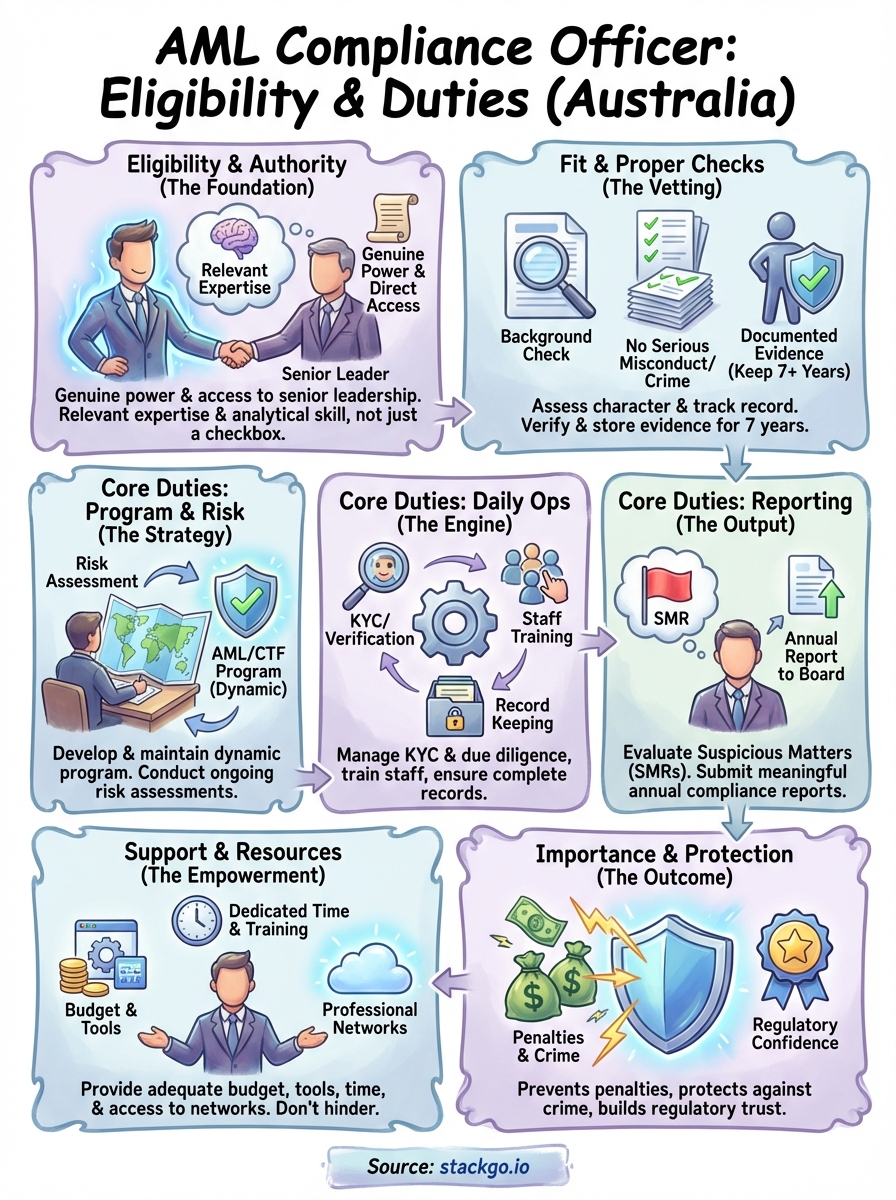
Your compliance officer carries specific legal obligations that go beyond general oversight, and AUSTRAC holds them personally accountable for meeting these duties. The officer must develop and maintain your AML/CTF program, ensuring it accurately reflects your business’s money laundering and terrorism financing risks. They’re responsible for conducting ongoing risk assessments that adapt to changes in your business model, customer base, or regulatory environment. This means they can’t simply copy a template program and leave it static for years.
Day-to-day compliance management
The officer oversees your customer identification and verification processes, ensuring staff apply appropriate due diligence measures based on risk levels. They need to monitor how your business handles politically exposed persons, high-risk jurisdictions, and complex ownership structures that could obscure beneficial ownership. Your officer also manages record-keeping obligations, confirming you maintain complete documentation for at least seven years after relationships end or transactions complete.
Training your staff falls squarely within the officer’s duties. They must ensure everyone who handles customers or transactions understands their reporting obligations, can recognise suspicious activity, and knows how to escalate concerns appropriately. Regular training updates become necessary as new money laundering typologies emerge or AUSTRAC issues fresh guidance on aml compliance officer requirements.
Suspicious matter reporting obligations
Your officer must evaluate all potential suspicious matters escalated by staff and determine whether they meet the threshold for reporting to AUSTRAC. This requires professional judgement based on a thorough understanding of money laundering indicators relevant to your business. They can’t delegate this decision to junior staff or rely solely on automated systems to flag reportable matters.
Your compliance officer’s reporting decisions directly affect whether your business meets its legal obligations and whether law enforcement receives intelligence needed to combat financial crime.
The officer also submits annual compliance reports to your board or senior management, detailing how effectively your AML/CTF program operates and identifying any deficiencies that need addressing. These reports must include meaningful analysis of your compliance performance, not just superficial summaries that tick regulatory boxes.
How to appoint and support the officer
Your formal appointment process needs to be documented in writing, with clear terms of reference that outline the officer’s authority, responsibilities, and reporting lines. You should issue a written appointment letter that specifies their duties under the AML/CTF Act, confirms their direct access to senior management, and establishes their budget authority for compliance activities. This documentation becomes critical evidence if AUSTRAC ever questions whether you’ve met the aml compliance officer requirements properly. Beyond the paperwork, you need to communicate the appointment across your organisation so staff understand who holds compliance authority and where to escalate concerns.
Making the formal appointment
You must obtain board or senior management approval before appointing your compliance officer, ensuring decision-makers understand the candidate’s qualifications and the scope of authority they’ll receive. Your appointment documentation should include the officer’s employment contract, a detailed position description covering specific compliance duties, and written confirmation that they meet fit and proper criteria you’ve assessed. Keep copies of all supporting evidence, including qualification certificates, reference checks, and any criminal history verifications you’ve conducted.
Communicate the appointment to AUSTRAC through your next annual compliance report, though you’re not required to notify them immediately upon appointment. Your internal announcement should reach all staff members who interact with customers or handle transactions, explaining how to contact the officer and when to escalate potential compliance issues.
Providing ongoing resources and authority
Your compliance officer needs dedicated time to perform their duties, not just a title added to an already full workload. Allocate sufficient budget for compliance software, training programmes, external legal advice when needed, and membership in professional compliance networks where they can stay current with industry developments. You can’t expect effective compliance work if the officer must constantly fight for resources or justify basic compliance expenditures.
Your compliance officer’s effectiveness depends entirely on the authority and resources you provide, not just their technical skills.
Regular meetings between the officer and senior management create opportunities to discuss emerging risks, resource needs, and strategic compliance challenges before they become regulatory problems.
Next steps for your AML governance
Meeting the aml compliance officer requirements starts with assessing whether your current appointment process and support structures match AUSTRAC’s expectations. Review your officer’s formal appointment documentation, verify you’ve conducted proper fit and proper checks, and confirm they have sufficient authority and resources to discharge their duties effectively. If gaps exist in any of these areas, address them immediately before AUSTRAC identifies them during an examination. Document your assessment findings and create an action plan for any deficiencies you discover.
Your compliance officer’s effectiveness depends partly on the tools you provide for customer verification and monitoring. StackGo’s IdentityCheck solution supports your officer by automating identity verification processes directly within your existing CRM or practice management software, reducing manual errors and freeing up time for higher-value compliance work. Explore how IdentityCheck handles AUSTRAC Tranche 2 requirements to see how integrated compliance tools can strengthen your overall AML governance framework without adding complexity to your daily operations.


