

If you’re buying property in Australia, there’s a compliance step you can’t skip: identity verification for property buyers, formally known as Verification of Identity (VOI). This process exists to confirm that the people involved in a property transaction are who they claim to be, and it’s a legal requirement across every state and territory.
VOI was introduced to combat property fraud, particularly cases where someone impersonates an owner to sell or mortgage a property they don’t actually own. The process involves presenting specific identity documents, such as passports, driver’s licences, and Medicare cards, to a conveyancer, lawyer, or authorised agent who verifies them against strict documentary standards.
For the professionals handling these checks, VOI can be time-consuming and error-prone when done manually. That’s exactly the problem StackGo solves. Our integration platform, including tools like IdentityCheck, lets conveyancers and regulated businesses run identity verification directly from their existing software, no extra tabs, no re-keying data, and no gaps in compliance. This article breaks down how VOI works, what documents you’ll need, and what the process looks like from both sides of the transaction.
What VOI is in Australian property transactions
VOI stands for Verification of Identity, and it is the formal, legally required process that confirms who you are before you can transfer, mortgage, or otherwise deal with property in Australia. It applies to buyers, sellers, mortgagors, and any other party whose name appears on a land dealing. Your conveyancer or solicitor carries out the check before lodging documents on your behalf, and they must follow strict documentary standards to do it correctly. Failing to meet those standards means the transaction stalls.
VOI is not a formality you can defer. Until your identity is verified to the required standard, your conveyancer cannot legally proceed with the lodgement.
The standard that governs VOI across Australia
The rules behind identity verification for property buyers come from the Model Participation Rules, developed by the Australian Registrars’ National Electronic Conveyancing Council (ARNECC). These rules specify which document categories are acceptable and exactly how many identity points a person must produce. Each state and territory has embedded the ARNECC framework into its own conveyancing legislation, so the standard is consistent regardless of where in Australia you are purchasing. New South Wales, Victoria, Queensland, and Western Australia all operate under the same underlying requirements, which removes ambiguity for buyers transacting across state lines.
How the check is actually performed
Your conveyancer will ask you to attend an appointment where they sight your original documents in person, confirm the details match your physical appearance, and record the outcome in writing. If you are overseas or in a remote location, they can authorise an approved agent, such as an Australia Post representative, to carry out the check on their behalf. Electronic VOI services are also available through certain approved providers, but the same ARNECC documentary requirements still apply regardless of the channel used.
Why property buyers must complete VOI
Property fraud is a documented problem in Australia. Fraudsters have impersonated property owners to sell or mortgage land they didn’t own, leaving victims with costly legal battles to reclaim their title. Identity verification for property buyers is the primary control that prevents this from happening, and it applies to every party named on a land dealing.
The legal obligation behind the requirement
Your conveyancer is not requesting your identity documents out of caution alone. State and territory legislation requires them to verify your identity before they can lodge any land dealing on your behalf. If they skip this step, they face regulatory penalties and direct liability for any fraud that results from the oversight.
You cannot bypass VOI, and no reputable conveyancer will proceed without completing it to the required standard.
What happens if VOI is not completed
Without a completed VOI check, PEXA and other electronic lodgement platforms will not accept your transaction documents. Your settlement date will slip, and you risk losing finance approvals or contract deadlines as a result.
Your conveyancer will flag the missing check early in the process, but it remains your responsibility to attend the appointment and produce the required documents on time to avoid delays.
Documents you will usually need for VOI
The ARNECC standard groups identity documents into categories, and you need to produce enough documents across those categories to reach the required identity points threshold. Most buyers satisfy this with a combination of a primary photo ID, a secondary government-issued document, and a linking document that confirms your current address.
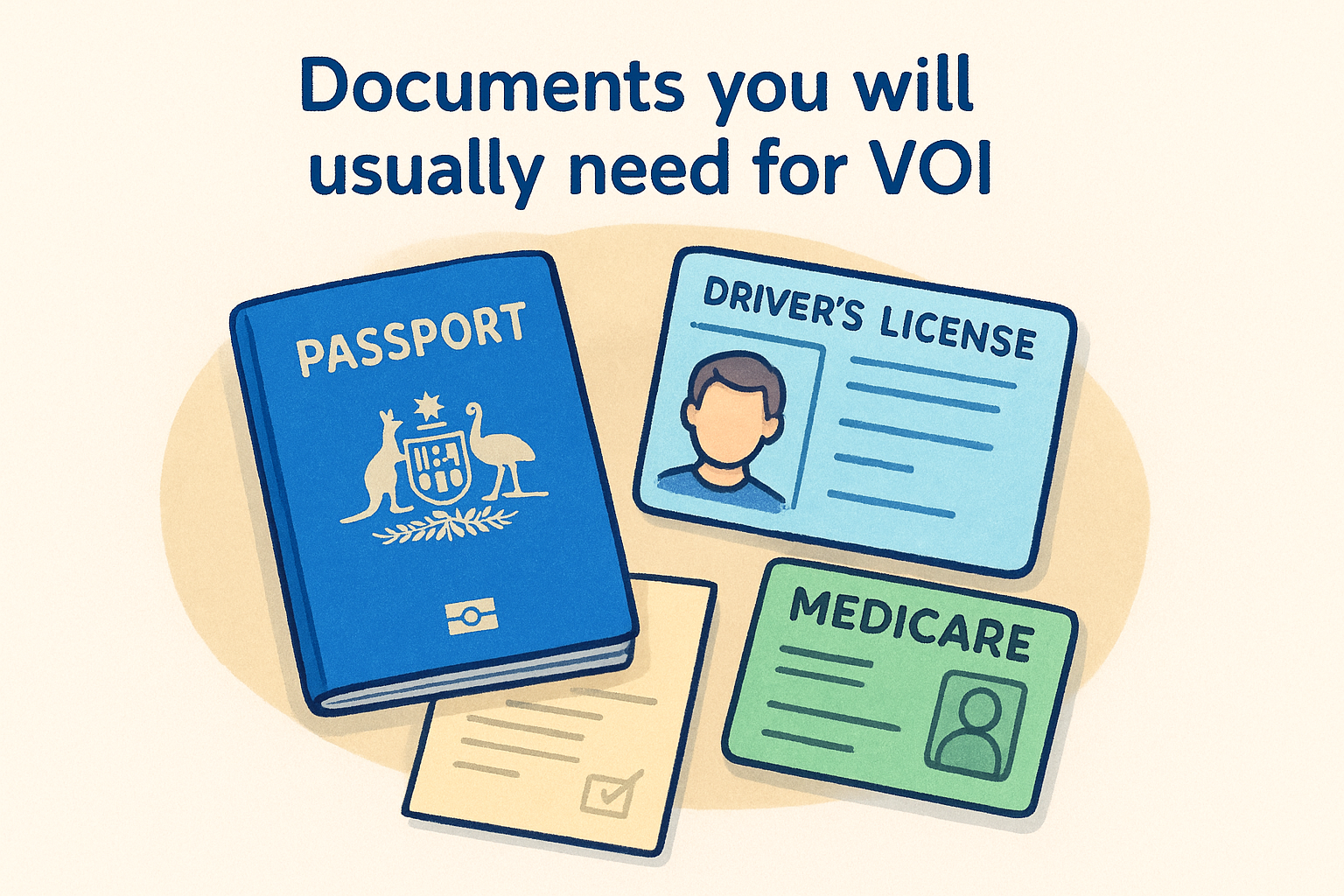
Primary photo identification
Your conveyancer will always request at least one primary photo ID as the foundation of your VOI check. Accepted options typically include:
- A current Australian passport
- A current driver’s licence issued in your state or territory
- A current overseas passport
Supporting documents
After your primary ID, you typically need one or two supporting documents to complete the identity verification for property buyers process. A Medicare card, a birth certificate, or a government-issued change-of-name certificate are the most commonly accepted choices across all states and territories.
Your conveyancer may also request a recent utility bill or bank statement to confirm your current residential address if your primary documents display an outdated one. Bring original documents to the appointment, as photocopies do not satisfy the ARNECC requirements.
Check expiry dates on every document before your appointment. An expired passport or licence will not meet the standard, and you will need to reschedule.
How the VOI appointment works step by step
Your conveyancer will contact you early in the transaction to schedule a VOI appointment well ahead of your settlement date. Most appointments take between 10 and 15 minutes, provided you arrive with all your original documents ready. The conveyancer or their authorised agent will sight each document, compare your appearance to the photo ID, and record the details in writing.
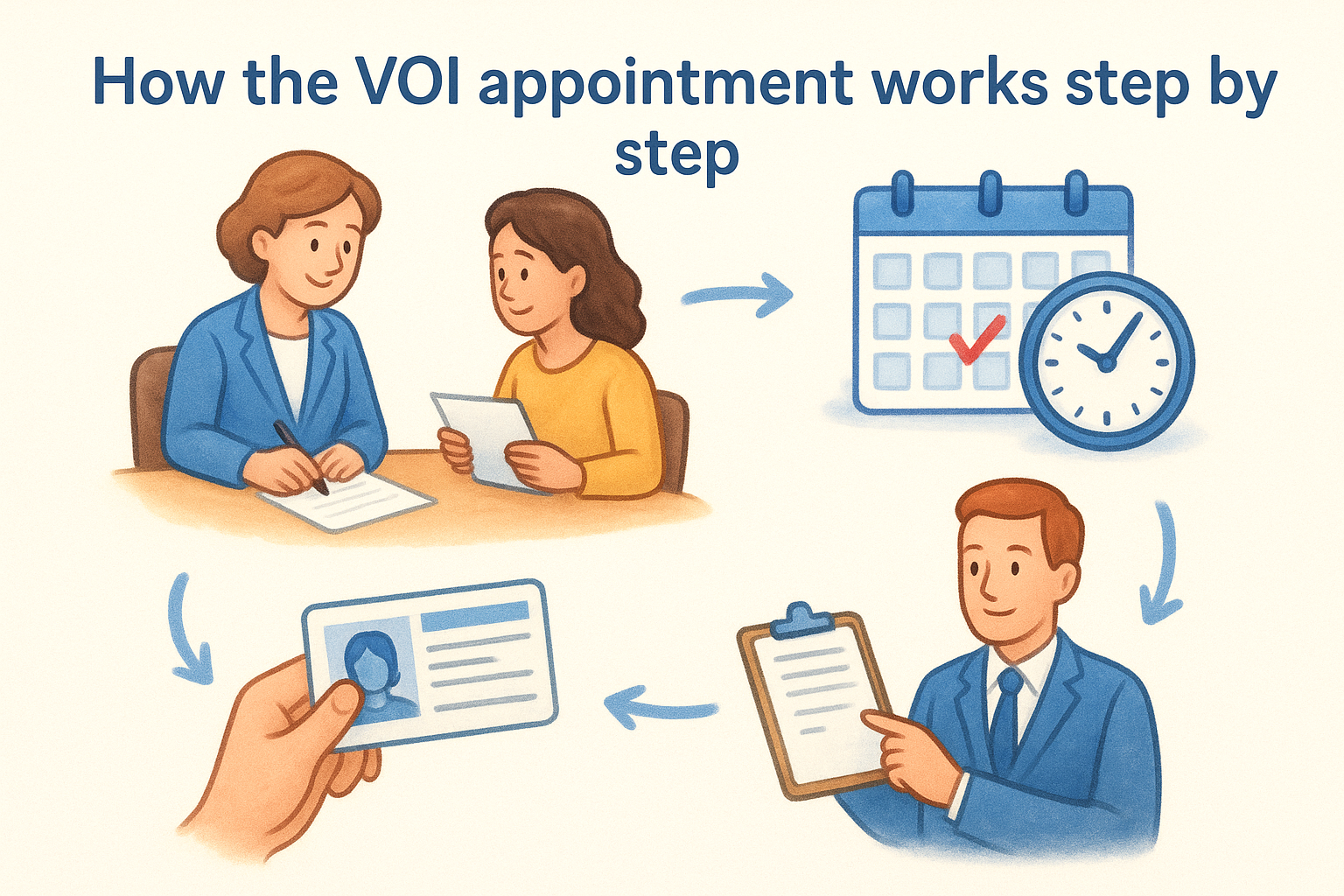
Bring every document in its original form. Certified copies are not acceptable under the ARNECC standard.
What the conveyancer records and does next
Once the conveyancer has sighted your original documents, they complete a VOI record that captures the document types presented, reference numbers, expiry dates, and a written confirmation that your physical appearance matched the photo. This record is stored on your file as formal proof that the identity verification for property buyers requirement has been met to the required standard.
After the record is complete, your conveyancer attaches it to your matter file and moves forward with preparing the land dealing documents for lodgement through PEXA or a similar electronic conveyancing platform. If any document fails the check, they will contact you promptly to resolve the issue before it creates a problem for your settlement date.
Edge cases and common VOI problems to avoid
Most buyers complete identity verification without issues, but a handful of common problems cause unnecessary delays. Knowing these in advance means you can prepare properly and avoid pushing back your settlement date.
When your name does not match across documents
Your documents must show a consistent legal name across all items. If your driver’s licence reflects a maiden name but your contract uses your married name, your conveyancer cannot complete the identity verification for property buyers check to the ARNECC standard without a linking document.
Gather your change-of-name documents before your appointment, not after.
Bring a change-of-name certificate or marriage certificate to connect the names across your identity documents. Your conveyancer will record this linking document as part of your VOI file to satisfy the requirement.
When you are overseas or cannot attend in person
If you are outside Australia at the time of your transaction, your conveyancer can authorise an approved agent at an Australian consulate or embassy to conduct the check on their behalf. Remote buyers within Australia can use approved electronic VOI services, though the same documentary requirements still apply. Contact your conveyancer as soon as you know you cannot attend in person so they can arrange the alternative process with enough time before your settlement date.
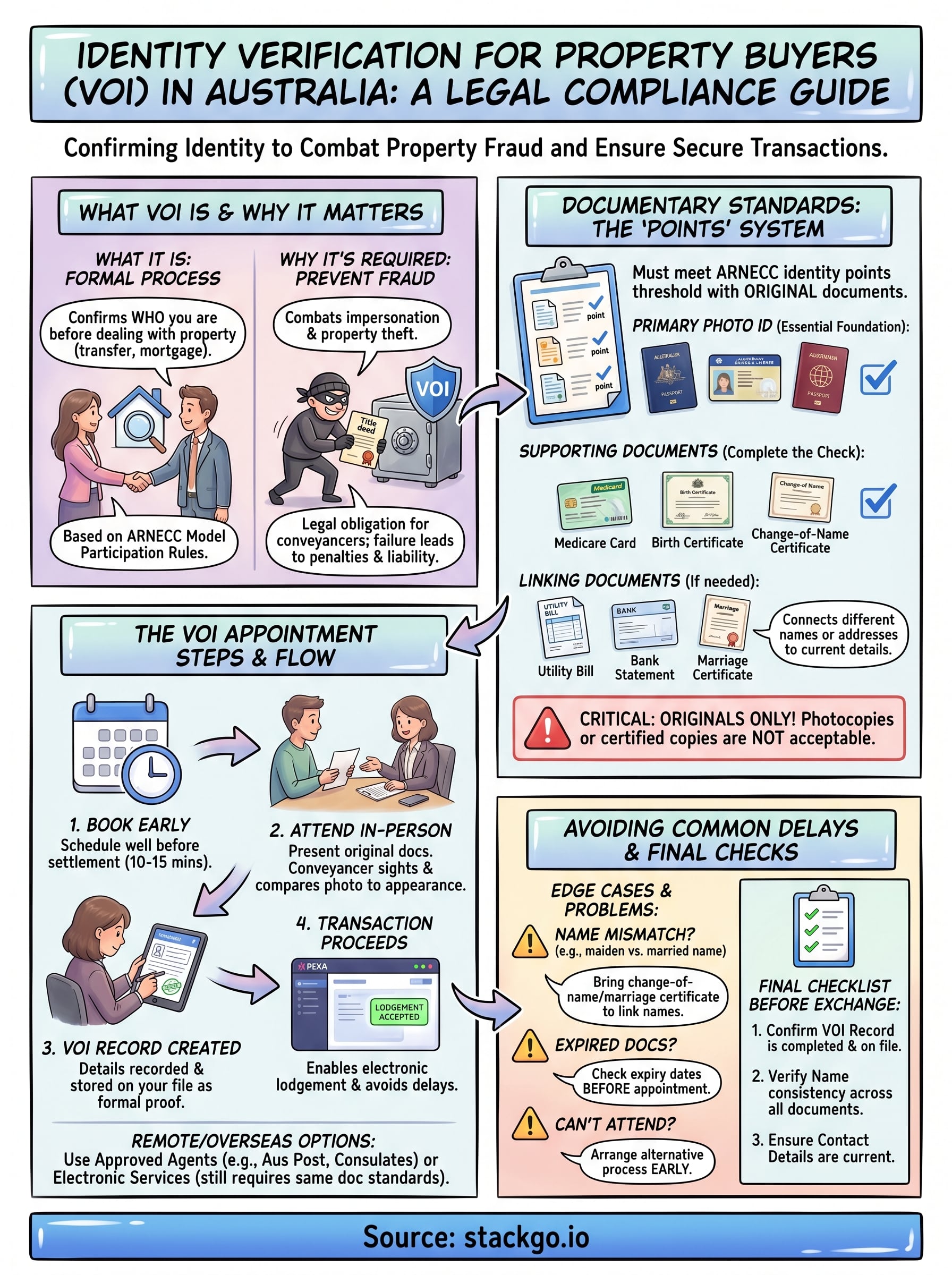
Final checks before you exchange
Before you reach settlement, confirm that your VOI appointment is completed and recorded on your conveyancer’s file. Do not assume it has been done because you attended the appointment. Ask your conveyancer to confirm the VOI record meets the ARNECC standard and that all documents have been accepted without issue.
Run through this short checklist in the week before exchange:
- Confirm your conveyancer holds a completed VOI record on your file
- Check that your name is consistent across all lodgement documents
- Verify your contact details are current so your conveyancer can reach you quickly
For conveyancers and regulated businesses handling identity verification for property buyers at volume, manual checks introduce real risk and delay. StackGo’s IdentityCheck integration runs compliance checks directly inside your existing software, with no re-keying and no extra tabs. Start a free account to see how IdentityCheck fits your workflow before your next transaction.


