

When screening clients for financial crime risks, businesses need access to reliable, comprehensive data. Refinitiv World-Check Risk Intelligence is one of the most widely used databases for identifying politically exposed persons (PEPs), sanctioned entities, and individuals linked to financial crime. For regulated industries, accountants, lawyers, financial services, understanding how this tool works is essential for maintaining compliant onboarding processes.
World-Check aggregates data from thousands of sources worldwide, helping organisations meet their KYC (Know Your Customer) and AML (Anti-Money Laundering) obligations. But accessing this intelligence is only part of the challenge. The real value comes from integrating these checks seamlessly into your existing workflows, whether that’s your CRM, practice management software, or client onboarding system. This is precisely where platforms like StackGo come in, enabling businesses to run identity verification and screening directly within their tech stack, without juggling multiple systems or manual data entry.
This guide explains what Refinitiv World-Check Risk Intelligence offers, how it supports compliance requirements, and what Australian businesses should consider when implementing PEP and sanctions screening.
Why World-Check matters for KYC and AML
Australian businesses operating in regulated sectors face strict obligations to verify that their clients aren’t involved in money laundering, terrorism financing, or corruption. Your organisation must screen individuals and entities against sanctions lists, PEP databases, and records of financial crime. Failing to do this exposes you to significant penalties, reputational damage, and the risk of unknowingly facilitating illegal activity.
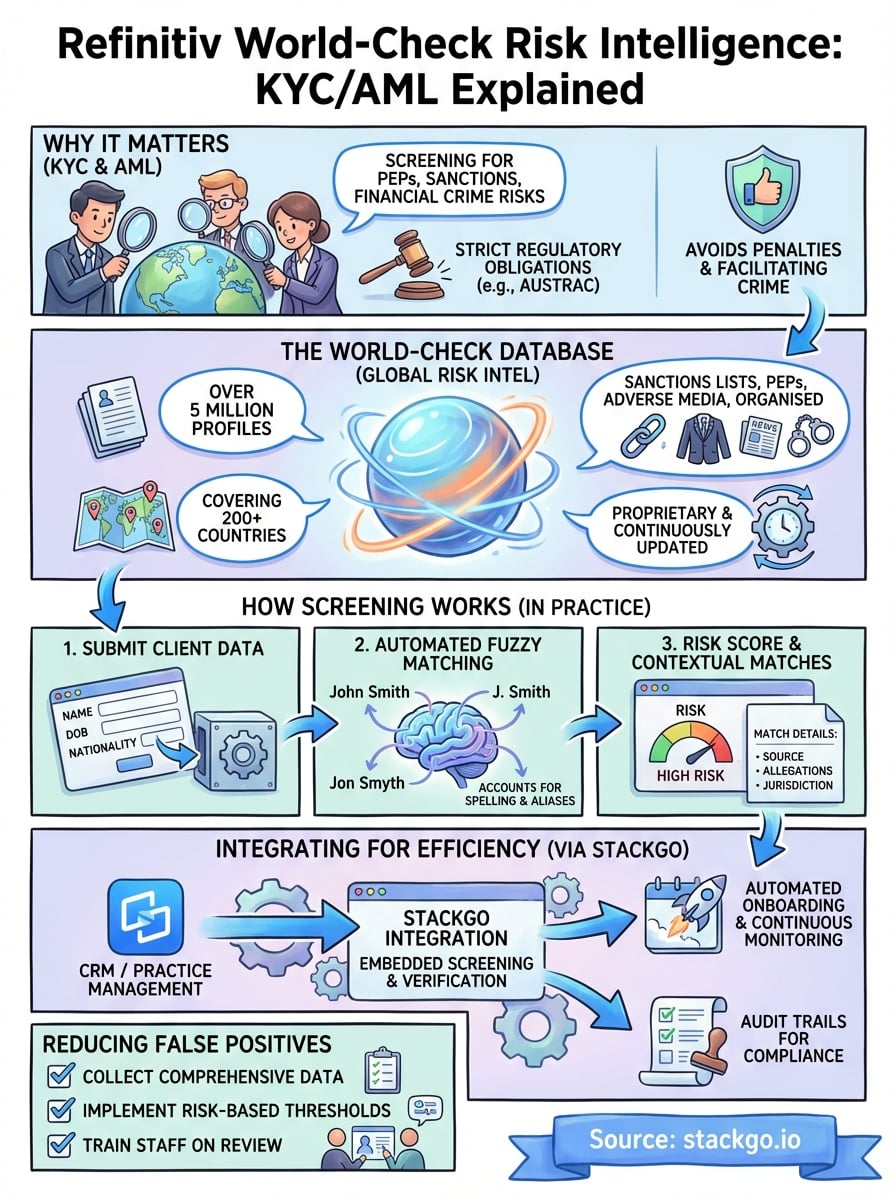
Refinitiv World-Check Risk Intelligence provides access to one of the largest risk intelligence databases globally, covering over 200 countries and territories. You gain visibility into whether your clients are politically exposed persons, sanctioned entities, or individuals linked to adverse media. This breadth of coverage is critical because financial crime networks operate across borders, and a domestic-only screening approach leaves dangerous gaps in your due diligence.
Without comprehensive screening, you risk onboarding clients who expose your business to regulatory action and criminal liability.
Meeting your regulatory obligations efficiently
Regulators such as AUSTRAC expect you to conduct ongoing due diligence throughout the client relationship, not just at onboarding. World-Check enables continuous monitoring, alerting you when a client’s risk profile changes due to new sanctions, criminal charges, or PEP status. This proactive approach keeps you compliant without requiring manual reviews of every client account.
The platform also provides detailed audit trails that document when and how you conducted each screening check. During regulatory reviews or audits, you can demonstrate that your compliance processes are robust, documented, and consistent. This evidence is essential for proving you’ve met your obligations under Australian AML/CTF legislation and professional body requirements.
For accounting firms, law practices, and financial services providers, integrating World-Check screening into your existing systems through platforms like StackGo means you eliminate manual lookups and reduce the risk of human error in critical compliance processes.
What World-Check includes and how it differs
Refinitiv World-Check Risk Intelligence contains over 5 million profiles covering individuals and entities flagged for financial crime risks, sanctions, or political exposure. You access records that include PEPs (Politically Exposed Persons), sanctioned individuals and entities, those with links to organised crime, terrorism financing, and adverse media mentions. The database draws from thousands of sources including government sanctions lists, regulatory enforcement actions, and reputable news outlets across multiple languages.
Types of records in the database
Your searches identify whether clients appear on international sanctions lists (UN, EU, OFAC), hold politically exposed positions, or have associations with criminal activity. The platform categorises risks by severity, helping you apply proportionate due diligence based on the specific threat level. You also receive context around each match, such as the nature of allegations, jurisdictions involved, and the status of any legal proceedings.
How it differs from basic screening tools
Unlike free government sanctions checkers, World-Check aggregates data from proprietary sources and structured adverse media analysis. You get continuous updates rather than static lists, and the platform applies sophisticated matching logic to reduce false positives while catching variations in names and aliases that basic tools miss.
World-Check provides the depth of intelligence that simple list-checking cannot deliver.
How World-Check screening works in practice
When you run a World-Check screen, you submit client information (name, date of birth, nationality) through either the platform’s interface or an API integration. The system searches across millions of records and returns potential matches within seconds, ranked by relevance. You receive a risk score and detailed profile information for each match, including the source documents and reasons for inclusion in the database.
The screening process
Your workflow begins when client data enters your system, whether that’s during initial onboarding or through ongoing monitoring triggers. Refinitiv World-Check Risk Intelligence compares this information against its database using fuzzy matching algorithms that account for spelling variations, transliterations, and common aliases. You receive results that classify each potential match by risk category, making it clear whether you’re dealing with a sanctions hit, PEP, or adverse media mention.
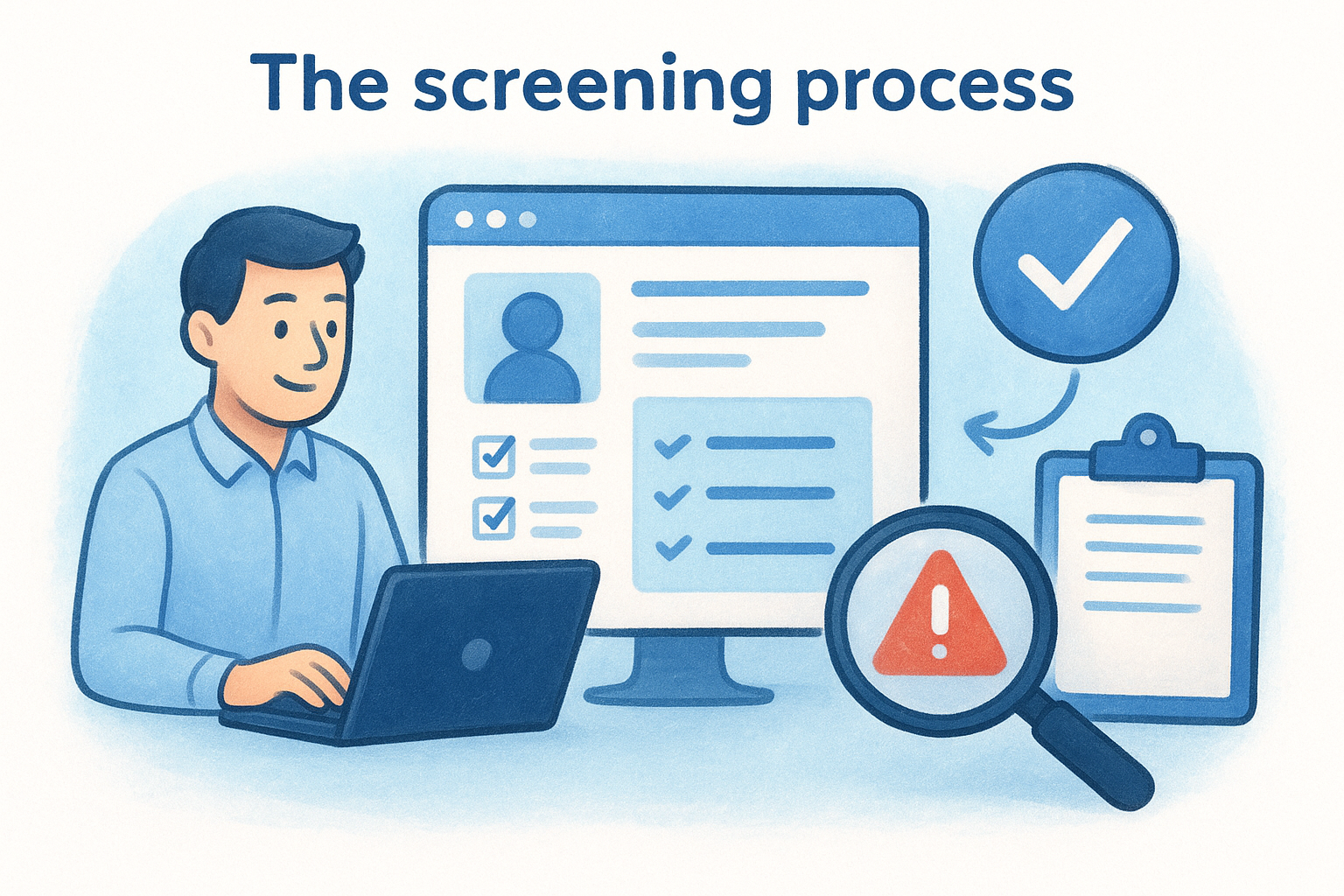
Automated screening eliminates the delay and errors inherent in manual checking.
Interpreting match results
Each result provides contextual information including the nature of the risk, jurisdictions involved, and date of last update. You must review matches to determine whether they’re true positives or false matches on similarly named individuals. For confirmed matches, you apply enhanced due diligence appropriate to the risk level, which may involve additional documentation requests or senior management approval before proceeding with the client relationship.
Limitations and how to reduce false positives
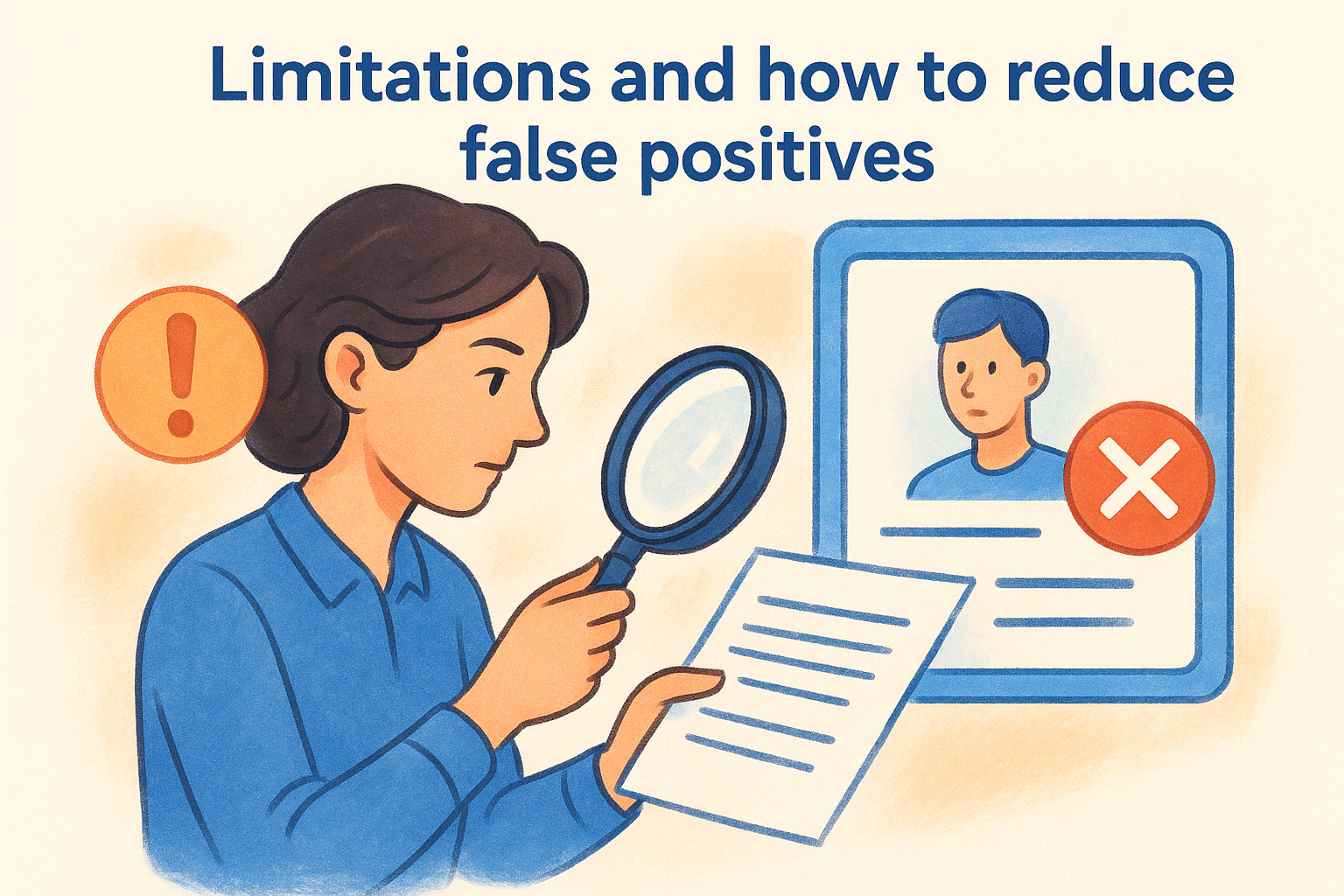
Refinitiv World-Check Risk Intelligence delivers extensive coverage, but no screening system is perfect. You will encounter false positives where innocent clients match database entries due to common names, transliteration variations, or incomplete data. These false matches require manual review, which consumes staff time and can delay legitimate client onboarding. Understanding these limitations helps you implement processes that balance thoroughness with efficiency.
Common sources of false matches
False positives typically arise when multiple individuals share similar names, particularly common surnames in large populations. You also see matching errors when transliterations from non-Latin alphabets create spelling variations that the system flags as potential matches. Incomplete client data (missing middle names or dates of birth) increases the likelihood of false hits because the matching algorithms have fewer distinguishing factors to work with.
Collecting comprehensive client details upfront prevents the majority of false positive matches.
Practical steps to reduce false matches
You reduce false positives by collecting comprehensive client information at onboarding, including full legal names, dates of birth, nationalities, and identification document numbers. Implementing risk-based screening thresholds allows you to apply stricter matching rules for high-risk jurisdictions while using relaxed parameters for low-risk clients. Regular training ensures your compliance team can quickly distinguish false matches from genuine risks, improving processing speed without compromising accuracy.
How to integrate screening into your workflow
Effective compliance requires embedding Refinitiv World-Check Risk Intelligence screening directly into your existing systems rather than treating it as a separate manual task. You eliminate delays and errors by connecting screening checks to your CRM, practice management software, or client onboarding platform through API integration. This approach means client data triggers automatic screening at critical points without staff needing to switch between systems or manually enter information.
Automated screening at onboarding
Your client onboarding process should trigger automatic screening the moment new client details are entered into your system. Platforms like StackGo enable you to run identity verification and World-Check screening natively within your CRM, reading contact information, conducting the check, and writing results back without manual intervention. You receive instant alerts for matches, allowing your compliance team to review and approve or reject clients before proceeding.
Automated integration removes the risk of staff forgetting to run required checks during busy periods.
Continuous monitoring triggers
Beyond initial onboarding, you need ongoing monitoring that alerts you when existing clients’ risk profiles change. Configure your system to trigger rescreening based on predefined intervals (quarterly, annually) or specific events such as large transactions or relationship changes. This ensures you maintain compliance throughout the client lifecycle without manual calendar tracking or periodic bulk reviews.
Next steps for safer client onboarding
Refinitiv World-Check Risk Intelligence provides the comprehensive screening data you need for KYC and AML compliance, but the real efficiency gains come from integrating these checks into your existing systems. Manual screening processes create delays, increase error rates, and frustrate both staff and clients during onboarding. Running checks through separate platforms adds friction that slows your business operations.
Australian businesses now face stricter AUSTRAC obligations under Tranche 2 regulations, requiring automated and documented screening workflows. You eliminate compliance gaps by running identity verification and World-Check screening directly within your CRM or practice management software, creating audit trails that satisfy regulatory requirements without additional administrative burden.
StackGo’s IdentityCheck solution enables you to conduct AUSTRAC Tranche 2 AML/CTF screening natively within your existing software, removing the need to adopt separate compliance platforms or manually transfer client data. Your team completes verification checks in seconds rather than hours, improving client experience while maintaining robust compliance standards across all onboarding touchpoints.


