

Screening clients against Politically Exposed Person (PEP) lists is a core requirement for businesses operating under AML/CTF obligations. LexisNexis PEP screening is one of the most recognised solutions in this space, used by financial institutions and regulated entities worldwide to identify high-risk individuals during onboarding. For Australian accounting firms preparing for upcoming AUSTRAC regulations, understanding how these screening tools work is essential for building a compliant verification workflow.
LexisNexis offers extensive global coverage and sophisticated risk-scoring capabilities, but knowing when and how to deploy PEP screening within your existing systems matters just as much as the data itself. At StackGo, we help regulated businesses integrate identity verification and screening processes directly into their CRM, so compliance checks happen where your team already works, without juggling multiple platforms or manual data entry.
This article explains how LexisNexis PEP screening functions, what data sources it draws from, and how to determine whether it fits your compliance requirements. We’ll also cover practical considerations for integrating PEP screening into your client onboarding process.
What LexisNexis PEP screening covers
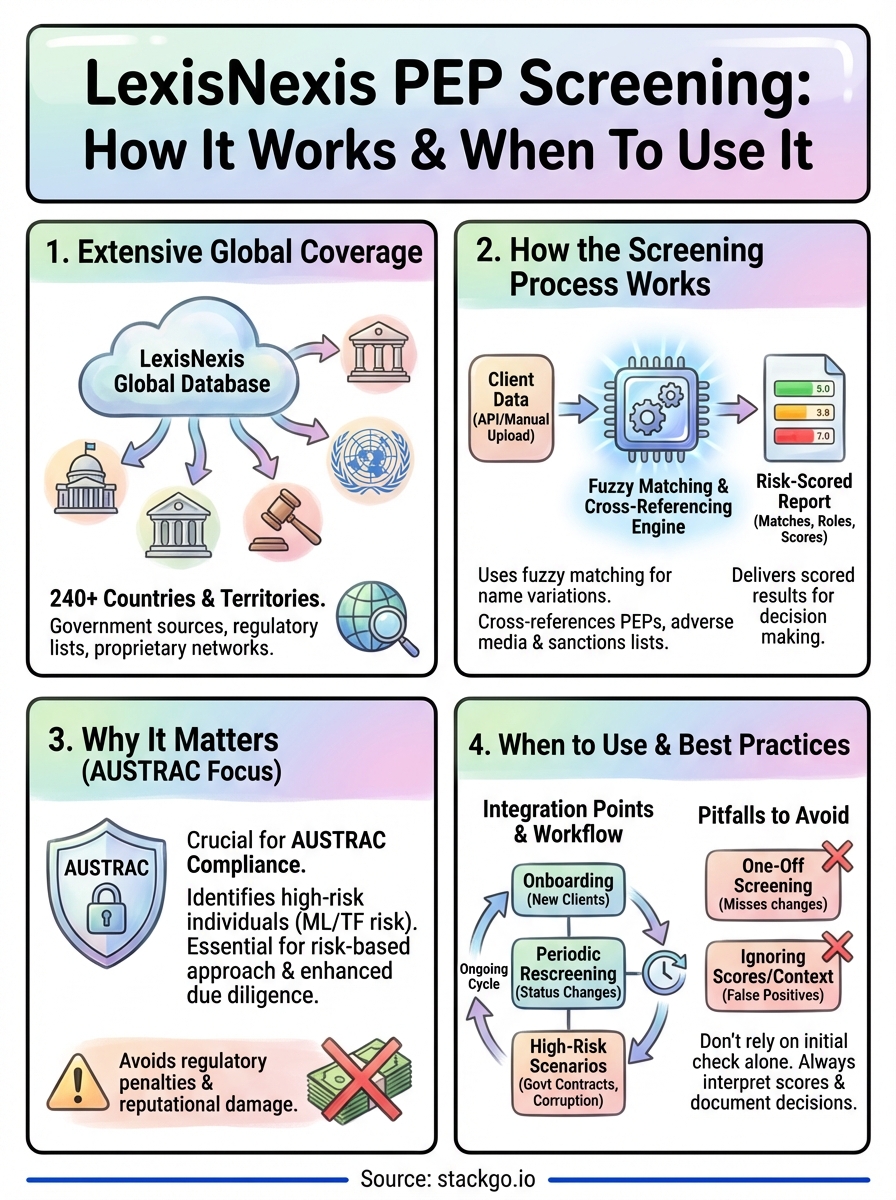
LexisNexis maintains one of the largest commercial databases of politically exposed persons worldwide, pulling from thousands of government sources, regulatory lists, and proprietary research networks. When you run a PEP check through their platform, you’re querying records across more than 240 countries and territories, including national parliaments, state-owned enterprises, judicial branches, and international organisations. The system categorises individuals based on the level of influence they hold, which helps you assess risk according to your specific compliance obligations.
Global database sources and coverage
Your screening results draw from official government registries, parliamentary records, central bank appointments, and regulatory filings that LexisNexis aggregates continuously. The platform also includes adverse media monitoring and sanction list cross-references, so you can identify whether a flagged individual appears on OFAC, UN, or AUSTRAC watchlists alongside their PEP status. This breadth of coverage means you’re not just checking a single list, but verifying against multiple layers of public and private intelligence sources.

LexisNexis updates its PEP database in real time, ensuring you catch newly appointed officials or individuals who’ve recently stepped down from public roles.
Who gets flagged as a PEP
The system identifies three main categories: domestic PEPs (senior officials within your jurisdiction), foreign PEPs (officials from other countries), and individuals tied to international organisations like the IMF or World Bank. Family members and known close associates of these individuals also trigger alerts, because regulatory frameworks like AUSTRAC’s AML/CTF rules extend screening requirements beyond the officeholder themselves. You’ll see risk scores attached to each match, helping you determine whether enhanced due diligence applies or if the connection is too distant to matter.
Why PEP screening matters in Australia
Australian businesses operating under AUSTRAC’s AML/CTF framework must identify customers who pose heightened money laundering or terrorism financing risks. PEP screening sits at the centre of this obligation because individuals holding prominent public positions have greater opportunities to hide illicit funds or abuse their authority. When you onboard a client without checking their PEP status, you’re exposing your business to regulatory penalties and reputational damage if that relationship later attracts scrutiny from law enforcement or AUSTRAC audits.
AUSTRAC’s risk-based compliance approach
AUSTRAC requires reporting entities to apply enhanced customer due diligence when dealing with PEPs, which means going beyond basic identity verification. You need to understand the source of their wealth, monitor transactions more closely, and document your risk assessment decisions in case regulators review your files. LexisNexis PEP screening helps you meet these obligations by flagging high-risk individuals before you establish a business relationship, rather than discovering the connection months later during a compliance audit.
Failing to screen for PEPs during onboarding can trigger enforceable undertakings or civil penalties under the AML/CTF Act, even if no actual misconduct occurred.
Accounting firms preparing for expanded AUSTRAC obligations need automated PEP screening workflows that integrate with their client intake process, not manual lookups that rely on staff remembering to check separate databases.
How LexisNexis PEP screening works
When you submit a client’s details for screening, LexisNexis PEP screening runs their name, date of birth, and other identifying information against its global database in seconds. The platform uses fuzzy matching algorithms to catch variations in spelling, transliteration differences, and name structures across languages, which prevents false negatives when clients have international backgrounds or use multiple name formats. You receive a risk-scored report showing any matches, the individual’s role, their jurisdiction, and whether they’re currently active in their position or have recently left office.
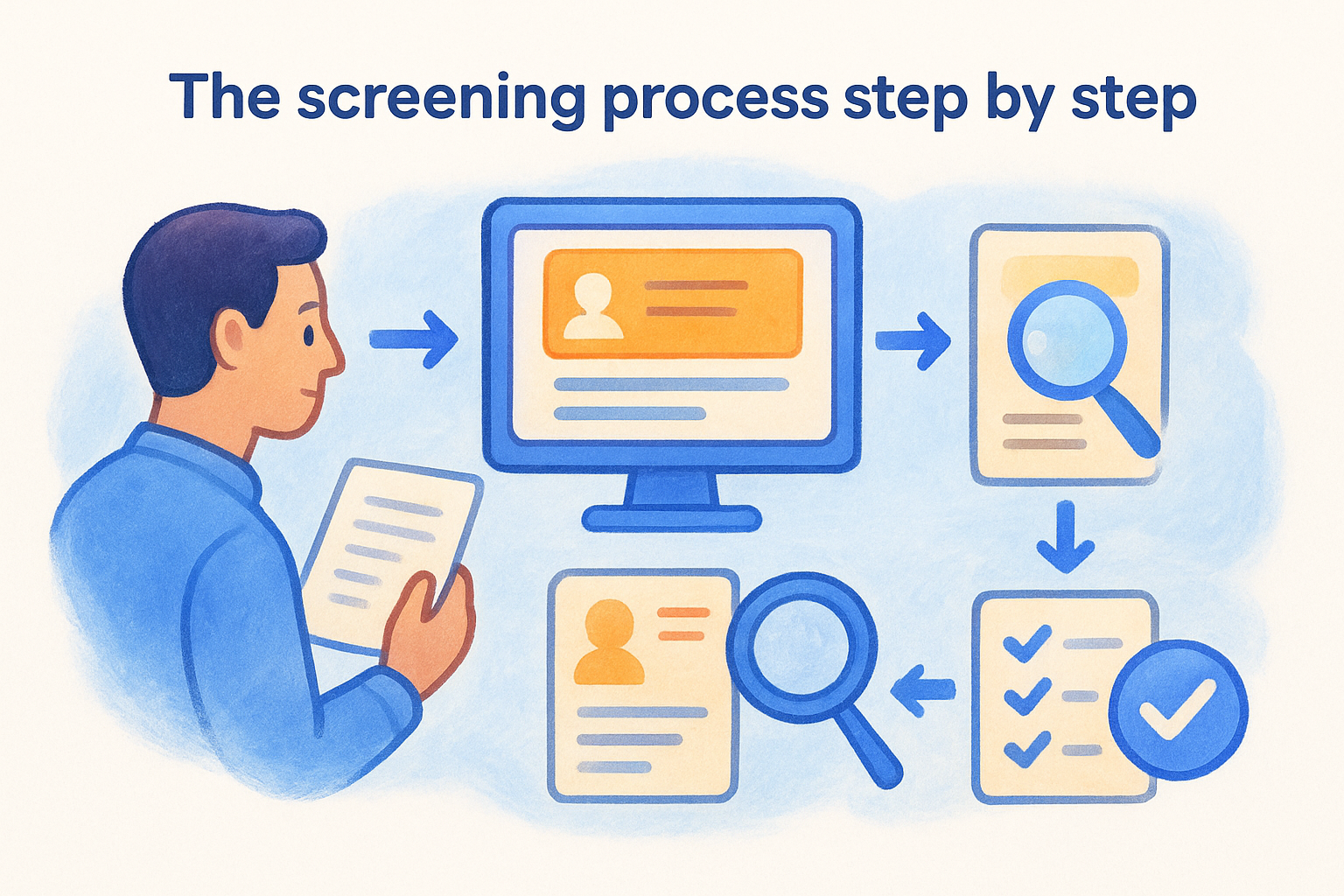
The screening process step by step
Your client data enters the system through API integration or manual upload, depending on how you’ve configured your compliance workflow. The platform cross-references submitted information against structured PEP records and adverse media sources, then applies proprietary scoring logic to rank matches by confidence level. Results appear within your dashboard, flagging exact matches, close associates, and potential false positives that need human review before you proceed with onboarding.
Real-time screening catches individuals appointed to public office between your periodic list updates, reducing the risk of onboarding someone flagged after their initial check.
When to use LexisNexis tools and workflows
Your compliance workflow needs LexisNexis PEP screening whenever you’re onboarding new clients in regulated sectors, particularly if you’re an accounting firm, financial advisor, or legal practice subject to AUSTRAC obligations. Running checks at the start of your relationship prevents you from discovering high-risk connections after you’ve already established trust and shared sensitive information. You should also rescreen existing clients periodically, because individuals move in and out of politically exposed positions throughout their careers, and someone who wasn’t flagged two years ago might now hold a senior government appointment.
High-risk client scenarios requiring immediate screening
Use LexisNexis tools when your client operates in jurisdictions known for corruption, handles large cash transactions, or requests services that involve international fund transfers. Accounting firms should screen every director and beneficial owner listed in corporate structures, not just the primary contact person. If your client’s business involves government contracts, public procurement, or state-owned enterprises, PEP screening becomes essential regardless of transaction size.
Screening only your primary contact misses the beneficial owners and related parties where actual political influence sits, leaving gaps in your risk assessment.
Integration points in your onboarding process
Deploy screening checks before finalising engagement letters, so you can refuse the relationship or apply enhanced due diligence terms from the outset. Automated workflows that trigger PEP screening when new contact records enter your CRM eliminate the risk of staff forgetting manual checks during busy periods.
Common pitfalls and best-practice checks
Running PEP checks without understanding how to interpret the results creates compliance gaps that regulators spot immediately during audits. Many businesses treat screening as a tick-box exercise, where they run the check but fail to document their risk assessment or apply enhanced due diligence when matches appear. Your screening workflow needs clear decision-making criteria that tell staff what to do when LexisNexis flags a potential match, rather than leaving interpretation to individual judgment calls.
Relying on one-off screening without periodic reviews
Screening clients once during onboarding misses status changes that occur throughout your business relationship. Someone who wasn’t politically exposed last year might now hold a senior government appointment, and your compliance obligations shift accordingly. Set up automated rescreening schedules that trigger checks at regular intervals, particularly before renewing engagements or processing high-value transactions. LexisNexis PEP screening updates its database continuously, but those updates only benefit you if you’re actually running periodic checks against your existing client base.
A client appointed to a ministerial role six months after onboarding won’t trigger alerts unless your workflow includes ongoing monitoring.
Ignoring false positives and scoring context
Treating every match as a confirmed PEP wastes resources and frustrates legitimate clients who happen to share common names with flagged individuals. Review the confidence scores and biographical details LexisNexis provides before escalating matches to enhanced due diligence procedures.
Key takeaways and next steps
LexisNexis PEP screening gives you global coverage and real-time updates that meet AUSTRAC’s requirements for identifying politically exposed persons during client onboarding. You need screening workflows that integrate directly into your existing systems, not standalone platforms that create manual data entry and increase the risk of missing critical checks. Running periodic rescreening catches status changes throughout your client relationships, and proper documentation of your risk assessment decisions protects you during regulatory audits.
Your next step depends on whether you’re building compliance workflows from scratch or fixing gaps in your current process. Australian accounting firms preparing for expanded AML/CTF obligations need automated screening that sits inside their CRM, where client data already lives. StackGo’s IdentityCheck handles AUSTRAC Tranche 2 requirements by running PEP checks and identity verification directly within platforms like HubSpot, so your team never leaves their daily workspace to complete compliance tasks. This eliminates the friction that causes manual processes to break down under operational pressure.


